Short answer: To find your home’s facing direction in Feng Shui, stand with your back to the front door looking outward, take a compass bearing in that direction, and map the bearing to one of eight 45-degree sectors. That outward bearing is the facing direction; the opposite bearing is the sitting direction. Note that in classical practice the “facing” is sometimes defined by the most open, brightest or busiest side of the building rather than by the door itself.
Key takeaways
– Facing direction is the direction a building looks toward; sitting direction is its 180-degree opposite. Both are used, so a reading must say which one it means.
– The eight directions are 45-degree sectors: N 337.5–22.5, NE 22.5–67.5, E 67.5–112.5, and so on.
– Many schools define the facing by the building’s most “open” side (light, view, activity), not strictly by the front door — apartment buildings often differ from their entrance doors on this point.
– Facing direction feeds Ba Zhai / Eight Mansions readings (with your Kua number) and Flying Stars charts; it is an input, not a verdict.
– This is a cultural tradition, not a measurable property of a building.
What “Front Door Direction” Actually Means
People use “front door direction” loosely for two different things: the compass direction the door opens toward, and the direction the whole home is said to “face.” Classical Feng Shui is about the second. A home is described by a pair of bearings — zuo (sitting, “back”) and xiang (facing, “front”) — and the pair is what gets fed into the direction-based schools.
The traditional reasoning is about how a site receives light, air, view and activity: the facing side is the “open” side, the sitting side is the “support” side. That is why a house on a slope with a valley view, or a shop facing a busy street, can be assigned a facing that differs from where its nominal front door sits. The compass-bearing-at-the-door method is a modern simplification that works well enough for a detached house with an obvious front.
The wider framework behind these ideas is set out in Feng Shui: The First Study — The 3,000-Year-Old Blueprint for Wealth, Love & Luck, which traces how orientation came to be read alongside ideas about wealth, love and fortune. For a mechanical direction reading, the Ba Zhai and Flying Stars home compass takes a bearing as its input.
Facing Direction vs. Sitting Direction (and Why the Door Is Not Always the Answer)
If your front door faces due south, the sitting direction is due north, and older texts will often name the home “sitting north, facing south” (zuo bei chao nan) — a phrasing that puts the sitting direction first. This reversal trips up a lot of casual reading: a chart labelled with the sitting direction can look like a chart for the opposite building.
Three situations where the door is a poor proxy:
Apartments and towers. The building entrance may face a courtyard while your unit’s main windows and balcony face the street. Practitioners disagree on whether to use the building entrance, the unit door, or the brightest exposure.
Corner sites and split fronts. A building with two equally prominent facades has no single unambiguous “open” side.
Renovated or extended homes. A later extension or a moved entrance can change the apparent front without changing the original orientation.
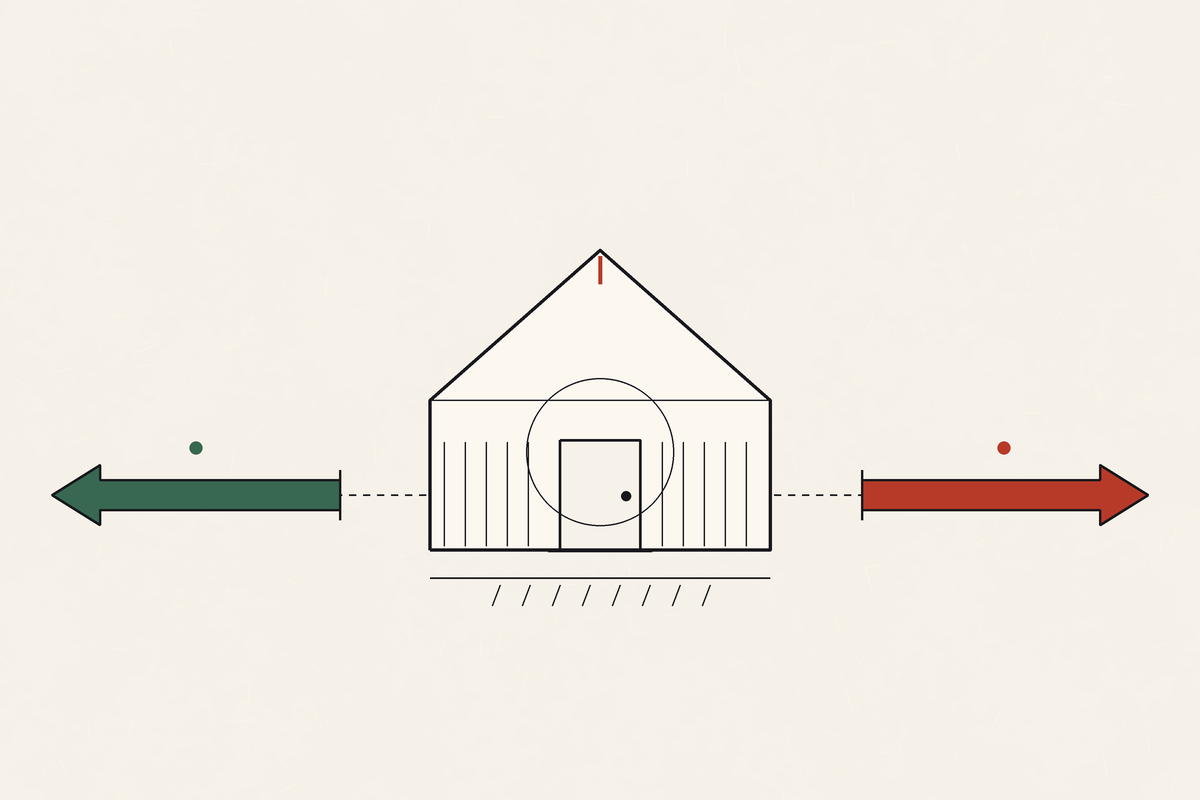
Figure 1. Facing and sitting are opposite bearings on the same axis.
The honest approach: record the bearing you measured, note which surface you used, and keep that choice consistent across any further reading. A companion article on Kua numbers covers the personal-direction side, and one on sleeping directions shows how a bearing gets applied to a bed.
How to Measure Your Home’s Facing Direction (Step by Step)
Step 1 — Choose the reference surface. For a detached house, use the main entrance, standing just outside or at the threshold. For an apartment, decide in advance whether you are reading the building entrance or your unit’s main exposure, and write it down.
Step 2 — Stand with your back to the door, looking outward. The bearing you read straight ahead is the facing direction. Standing the other way gives you the sitting direction; do not mix them.
Step 3 — Take the bearing. Hold a compass or phone level, away from metal doors, frames, radiators and cars. Steel reinforcement in a doorway can swing a reading by several degrees, so step a metre or two away from the frame and take three readings.
Step 4 — Average and check for interference. If the readings vary by more than about five degrees, move away from metal and repeat. Indoor readings near structural steel are the most common source of error.
Step 5 — Map the bearing to one of eight sectors. Each direction spans 45 degrees: N 337.5–22.5, NE 22.5–67.5, E 67.5–112.5, SE 112.5–157.5, S 157.5–202.5, SW 202.5–247.5, W 247.5–292.5, NW 292.5–337.5. A reading of 100 degrees, for example, is East.
Step 6 — Record both bearings. Write “facing 100 deg (East), sitting 280 deg (West), reference: main entrance, magnetic north” so that anyone re-reading the note later knows exactly what was measured.
The Eight Facing Directions (Quick-Reference Chart)
| Direction | Bearing range (deg, magnetic) | Trigram | Element |
|---|---|---|---|
| North | 337.5 – 22.5 | Kan, Water | Water |
| North-East | 22.5 – 67.5 | Gen, Mountain | Earth |
| East | 67.5 – 112.5 | Zhen, Thunder | Wood |
| South-East | 112.5 – 157.5 | Xun, Wind | Wood |
| South | 157.5 – 202.5 | Li, Fire | Fire |
| South-West | 202.5 – 247.5 | Kun, Earth | Earth |
| West | 247.5 – 292.5 | Dui, Lake | Metal |
| North-West | 292.5 – 337.5 | Qian, Heaven | Metal |
These trigram-to-direction pairings belong to the “Later Heaven” (Xiantian / Hou Tian) arrangement used in compass-school Feng Shui. A front-door bagua reading uses a different alignment — the grid is rotated to the entrance wall instead of to compass bearings — so do not paste this table onto a bagua floor plan and expect the two to agree.

Figure 2. The eight 45-degree sectors around a doorway.
Using Your Facing Direction: Kua Numbers, Flying Stars and Practical Limits
A facing bearing is an input to several systems:
Eight Mansions (Ba Zhai). Your Kua number gives four favourable and four less-favourable directions; the home’s facing and sitting are then compared against them. The home audit tool for Kua number, facing directions and Flying Stars applies both in one pass.
Flying Stars (Xuan Kong). Charts assign stars to a grid using the home’s facing/sitting pair and the period or year in which the building was “born.” Which star sits where depends on the specific period convention used; if you want to work with a current chart, consult an up-to-date reference for the year in question rather than reusing an old table. We have not verified a 2026 star placement here, so none is claimed.
Renovation timing. Some traditions choose dates relative to the facing direction. The auspicious renovation-date guide covers that convention, and the renovation date picker applies it.
Practical limits. Daylight, ventilation, street noise, privacy and how you actually use the rooms have direct, measurable effects on how a home feels. The desk placement guide and the bedroom layout rules cover that practical layer. If a “favourable” facing conflicts with a room that is dark, loud or awkward, the sensible reading is to fix the room.
Figure 3. An uncluttered, well-lit entrance — the practical part of most front-door advice.
Common Mistakes
Confusing facing with sitting. They are 180 degrees apart. Always label which one a reading uses.
Taking a compass reading in a steel doorway. Metal frames and reinforcement can swing the needle; step away and average several readings.
Using the unit door when the school intends the building’s facing. Decide and document the reference surface.
Ignoring magnetic declination. For 45-degree sectors it rarely matters, but for a reading near a sector boundary (22.5, 67.5, and so on) it can flip the result.
Mixing compass-school directions with a front-door bagua grid. They use different alignments; keep them in separate readings.
Assuming one bearing determines everything. It is one input among several, and the tradition itself uses more than one school.
Frequently Asked Questions
How do I find my front door’s facing direction? Stand with your back to the main entrance looking outward, take a compass bearing straight ahead, and map it to one of eight 45-degree sectors.
Is the facing direction the same as the sitting direction? No — they are opposites. “Sitting north, facing south” means the back is north and the front is south.
What if my front door and my living-room windows face different ways? That is common in apartments. Choose one reference surface, record it, and use it consistently; some schools use the brightest or busiest exposure instead.
Should I use magnetic or true north? Most Feng Shui compass practice uses magnetic north. State which you used; near a sector boundary, declination can change the assigned direction.
Does a north-facing house have bad Feng Shui? No. Direction alone is not a verdict in any of the major schools — it is an input combined with a chart, a period and a person’s Kua number.
What about Flying Stars for 2026? Year-specific star placements must be taken from a current chart for that year; we have not verified one here and make no claim about it.
Where can I try a direction reading? The Ba Zhai and Flying Stars home compass and the full calculator directory are the starting points.
Further Reading and a Note on Scope
Orientation is one thread in a long tradition connecting a home’s arrangement to ideas about wealth, love and fortune. For the historical background and the wider framework, see Feng Shui: The First Study — The 3,000-Year-Old Blueprint for Wealth, Love & Luck. Companion articles in this series cover Kua numbers, the bagua map and sleeping directions.
This article is presented for cultural, educational and entertainment purposes only. Feng Shui is a traditional belief system; nothing here is professional architectural, surveying, financial or legal advice.