Short answer: To calculate your personal year number, reduce your birth month and birth day to single digits, reduce the current calendar year to a single digit, add the three results, and reduce again. For 2026, the universal year reduces to 1 (2+0+2+6 = 10 → 1), so the formula is simply month + day + 1, reduced to a single digit.
Key takeaways
– The personal year number is a rolling nine-year cycle in modern numerology, derived from your birth month, birth day and the current year.
– Unlike the life path number, it changes every year — which is the whole point of the system.
– The universal year is a separate, shared number for everyone; for 2026 it is 1.
– Schools disagree about when a personal year starts: 1 January, the lunar new year, or your birthday.
– It is a symbolic and entertainment practice with no predictive validity.
What Is a Personal Year Number?
Modern numerology divides time into repeating cycles, and the personal year is the most widely used of them. The idea is that each year in a nine-step cycle carries a broad “theme”: 1 for beginnings, 2 for cooperation, 3 for expression, and so on up to 9 for completion. It is always personal in the sense that it is computed from your own birth date, but the nine themes themselves are the same for everybody.
This makes it a different kind of number from the life path number, which is fixed for life and comes from the full birth date including the year. The personal year deliberately drops your birth year and substitutes the current year, so the same arithmetic engine produces a value that advances by one each year. Two people born on the same day and month share a personal year number in any given year; people born in different years but on the same month and day do too.
For a tool that works from a single personal digit, see the personal fortune-digit lucky number generator; the full calculator directory lists other number-based tools.
How to Calculate Your Personal Year Number (Step by Step)
Use a birth date of 14 July and the current year, 2026.
Step 1 — Reduce the birth month. July is month 7 → 7.
Step 2 — Reduce the birth day. 14 → 1+4 = 5.
Step 3 — Reduce the current year. 2026 → 2+0+2+6 = 10 → 1. This value, on its own, is the universal year number.
Step 4 — Add the three. 7 + 5 + 1 = 13.
Step 5 — Reduce the total. 1+3 = 4. For this birth date, 2026 is a personal year 4.
An equivalent shortcut is to add the full birth-date digits to the current year and reduce once: 1+4+0+7+2+0+2+6 = 22, which some systems keep as a master number 22 and others reduce to 4. That discrepancy is a good illustration of why you should state which convention you are using: the short method above gives 4, the long method gives 22 or 4 depending on the master-number rule. Neither is an arithmetic error.
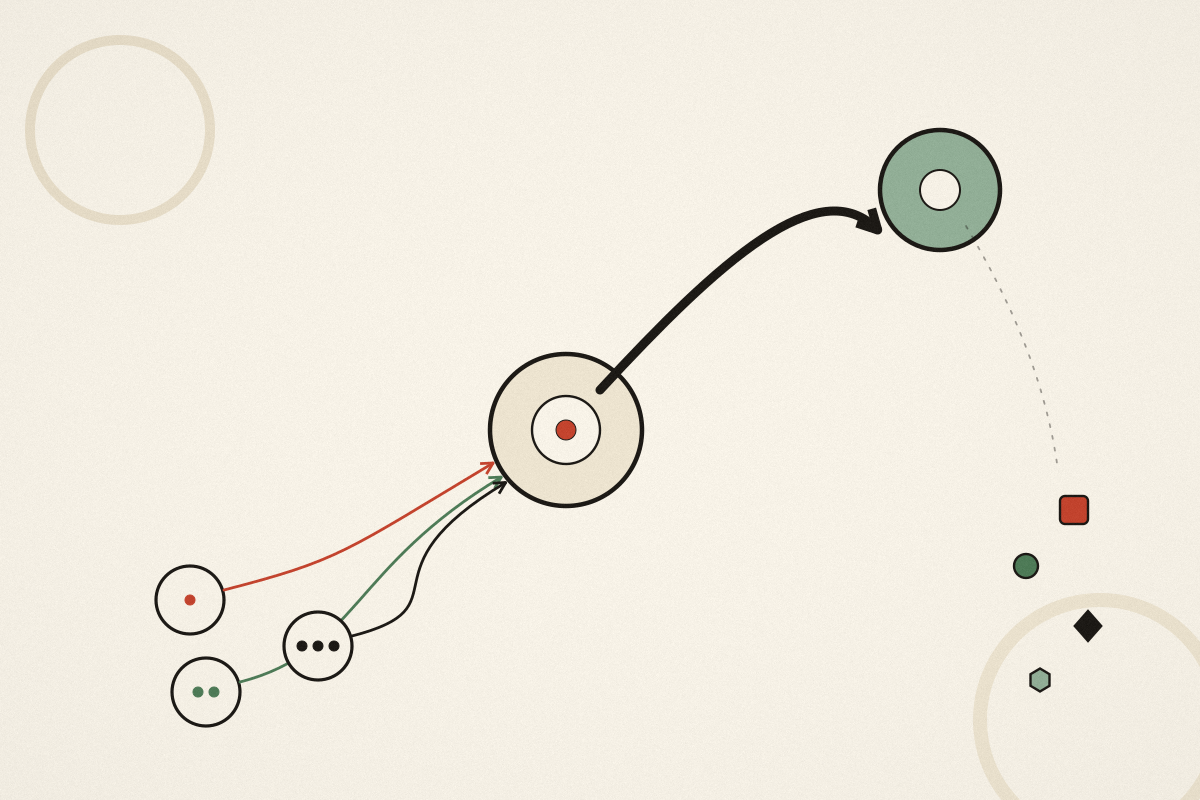
Figure 1. The three-stage calculation: month, day and current year into one reduced digit.
Personal Years 1–9 at a Glance (Quick-Reference Chart)
The keywords below are the conventional modern themes. They are descriptive labels, not forecasts.
| Personal year | Conventional theme | Conventional caution |
|---|---|---|
| 1 | New starts, initiative, planting seeds | Impatience, scattering effort |
| 2 | Partnership, patience, consolidation | Waiting too long, over-accommodating |
| 3 | Expression, social energy, creativity | Distraction, over-promising |
| 4 | Structure, work, building foundations | Rigidity, overwork |
| 5 | Change, travel, flexibility | Restlessness, instability |
| 6 | Home, family, responsibility | Over-involvement, worry |
| 7 | Study, reflection, research | Withdrawal, over-analysis |
| 8 | Ambition, resources, practical results | Workaholism, tunnel vision |
| 9 | Completion, release, generosity | Holding on, diffuse focus |
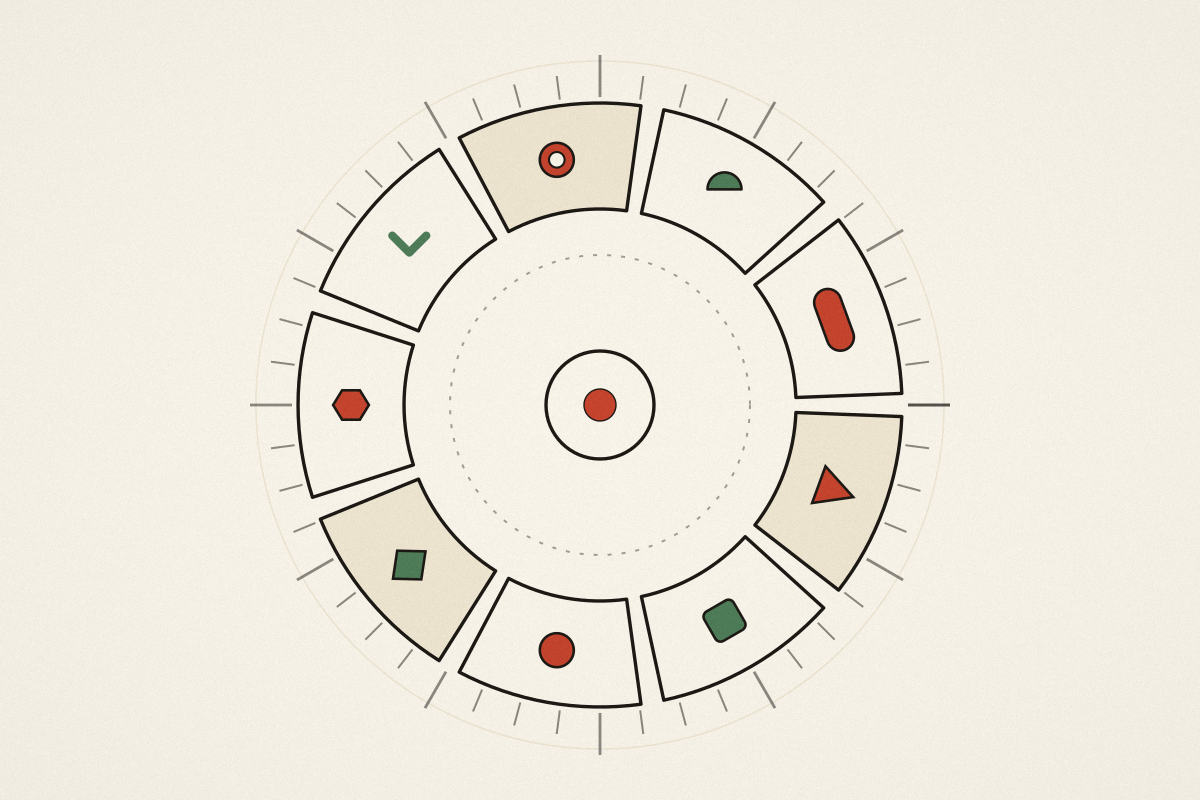
Figure 2. The nine themes drawn as wedges of a repeating cycle.
The Universal Year and Why It Is a Separate Idea
The universal year is simply the current calendar year reduced to a single digit, with no birth date involved. Everyone shares it. For 2026 it is 2+0+2+6 = 10 → 1; for 2027 it will be 2+0+2+7 = 11 → 2 in most systems (or 11 if master numbers are retained). Numerologists use it as a “background” theme and read the personal year against it.
Keeping the two straight matters, because a lot of online content blurs them. A headline saying “2026 is a 1 year” is talking about the universal year, not about you. Your personal year for 2026 is 1 only if your month + day + 1 reduces to 1 — that happens for some birth dates, not all. If a calculator returns “1” for everybody in 2026, it is giving you the universal year mislabelled as a personal one.
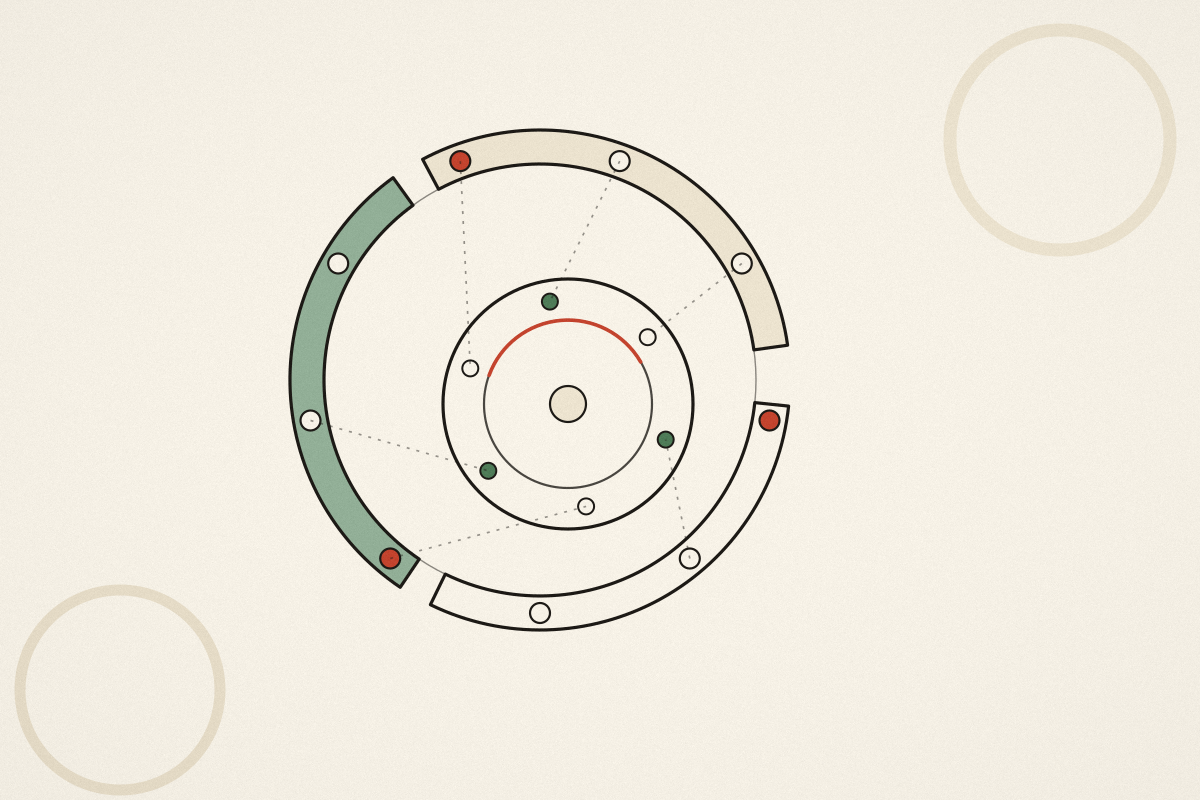
Figure 3. Two rings: a shared outer cycle and a personal inner one.
When Does a Personal Year Start? (Three Conventions)
1 January. The simplest and most common in Western numerology: the cycle turns with the calendar year. Most calculators use this.
The lunar new year. Some practitioners align the shift with the lunar new year (late January to mid-February), matching the boundary used in Chinese calendrical systems.
Your birthday. A third convention runs the personal year from one birthday to the next, so the “theme” changes mid-calendar-year for each individual.
There is no authority that settles the question, and the three conventions can give different answers for up to several weeks each year. The pragmatic approach: pick one, use it consistently, and do not mix a January-start reading with a birthday-start reading. A companion article on life path numbers covers the fixed-number side of the system; articles on lucky numbers and name numbers cover other derivations.
Common Mistakes
Including your birth year. The personal year swaps the birth year for the current year. Leaving both in produces a hybrid that belongs to no system.
Calling the universal year your personal year. 2026 reduces to 1 for everyone; your personal year depends on your month and day.
Mixing start-date conventions. Do not apply a birthday-based transition to a January-based reading.
Reducing master numbers inconsistently. If you keep 11, 22 or 33 in your life path calculation, keep the same rule here, or state that you are using single-digit reduction throughout.
Using the previous year by accident. In late December it is easy to compute with the year that is ending. Check which year the reading is for.
Treating the theme as a prediction. “A 4 year” is a label from a symbolic system, not a statement about what will happen.
Frequently Asked Questions
What is my personal year for 2026? Reduce your birth month and day, add 1 (the universal year for 2026), and reduce to a single digit. For 14 July: 7 + 5 + 1 = 13 → 4.
Does the personal year change every year? Yes — that is its defining feature. The life path number does not change.
What is the universal year for 2026? 2+0+2+6 = 10 → 1. It is shared by everyone and is not your personal year.
Should I keep 11, 22 or 33? Only if you adopt the master-number convention consistently across all your calculations. State which you use.
Does it start on 1 January or my birthday? Both conventions exist, plus a lunar-new-year variant. None is authoritative; be consistent.
Can two people share a personal year? Yes — anyone with the same birth month and day shares it, and in any year only nine values are possible.
Is there evidence the nine-year cycle predicts anything? No. It is a symbolic tradition with no demonstrated predictive validity.
Where can I try a related calculator? The personal fortune-digit lucky number generator works from a similar digit premise; the calculator directory lists others.
Further Reading and a Note on Scope
If the wider tradition of reading meaning from number and orientation appeals to you, Feng Shui: The First Study — The 3,000-Year-Old Blueprint for Wealth, Love & Luck places those ideas in their historical context. Companion articles in this series cover life path numbers, lucky numbers from a birth date and name numbers.
This article is presented for cultural, educational and entertainment purposes only. Numerology is a symbolic belief system; nothing here is professional financial, psychological, medical or legal advice.