Short answer: To calculate your life path number, add every digit of your full date of birth (day, month and year), then reduce the total to a single digit — keeping 11, 22 and 33 intact as “master numbers.” The result, from 1 to 9 (or 11, 22, 33), is your life path number.
Key takeaways
– The life path number is the single most widely used figure in modern Pythagorean (Western) numerology.
– It is derived only from your date of birth; your name produces different numbers, such as the expression and soul-urge numbers.
– Three common reduction methods — the full digit sum, the digit-by-digit sum, and the month/day/year grouping — normally give the same answer.
– 11, 22 and 33 are retained rather than reduced to 2, 4 and 6 in most modern systems, though schools disagree.
– Numerology is a symbolic and entertainment practice with no predictive validity.
What Is a Life Path Number?
In modern Western numerology, the life path number is meant to summarise the “theme” of a person’s life, read from the date they were born. It sits at the center of a small family of numbers: the expression (or destiny) number comes from your full name, the soul-urge number from the vowels in that name, the birthday number from the day alone, and the personal year number from your birth date plus the current year. The life path is the one practitioners treat as the core reading.
The system most English-language calculators use is traced to Pythagoras and his followers — the idea that numbers carry qualitative meaning — but the specific digit-to-number mapping used today was assembled largely in the late nineteenth and twentieth centuries. That history matters, because there is no single ancient authority to appeal to: different authors reduce numbers differently and disagree about master numbers. Treat any reading as one convention among several.
If you enjoy seeing how a single “personal digit” idea gets turned into a tool, the lucky number generator built around a personal fortune digit works on a similar birth-date-to-number premise, and you can browse the full calculator directory for other number-based tools.
How to Calculate Your Life Path Number (Step by Step)
Step 1 — Write the full date as digits. Use day, month and full year. For example, 14 July 1987 becomes 14 / 07 / 1987.
Step 2 — Add all the digits together. 1 + 4 + 0 + 7 + 1 + 9 + 8 + 7 = 37.
Step 3 — Reduce to a single digit. 3 + 7 = 10, then 1 + 0 = 1. The life path number is 1.
Step 4 — Watch for master numbers. If at any reduction step you land on 11, 22 or 33, most modern systems stop there and do not reduce further. A birth date summing to 29, for instance, reduces to 11 and stays 11 rather than becoming 2.
Step 5 — Check with a second method. Recalculate by grouping month, day and year separately (see the comparison below). If the two answers disagree, re-check your arithmetic — the methods should agree unless a master-number rule is being applied differently.
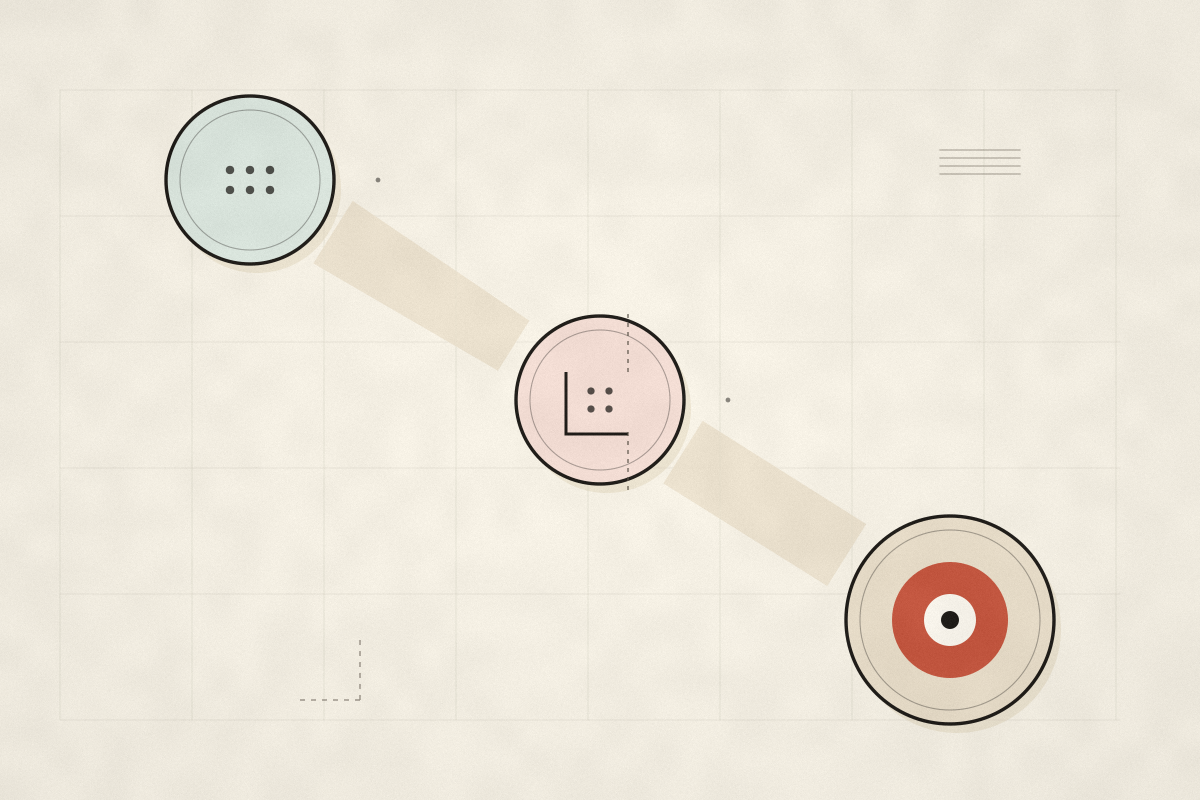
Figure 1. The three-stage reduction: add, group, reduce.
A worked example with a master number: 29 February 1992 gives 2 + 9 + 0 + 2 + 1 + 9 + 9 + 2 = 34, then 3 + 4 = 7. A date that produces 29 at the final stage, such as 11 November 1990 (1+1+1+1+1+9+9+0 = 23, then 5) — would not; a cleaner illustration is 5 May 1985: 5 + 5 + 1 + 9 + 8 + 5 = 33, which stays 33. The rule is simply: stop at 11, 22 or 33.
Life Path Numbers 1–9 at a Glance (Quick-Reference Chart)
The keywords below are the conventional modern associations; they are descriptive, not measured traits.
| Life path | Common keywords | Conventional “shadow” side |
|---|---|---|
| 1 | Independence, initiative, leadership | Stubbornness, impatience |
| 2 | Cooperation, diplomacy, sensitivity | Over-accommodation, indecision |
| 3 | Expression, creativity, sociability | Scattered energy, exaggeration |
| 4 | Order, discipline, practical building | Rigidity, over-caution |
| 5 | Change, freedom, adaptability | Restlessness, inconsistency |
| 6 | Responsibility, care, family | Over-involvement, worry |
| 7 | Analysis, introspection, research | Isolation, over-scepticism |
| 8 | Ambition, organisation, material command | Workaholism, control |
| 9 | Idealism, completion, generosity | Diffuse focus, aloofness |
Figure 2. The doubled “master” figures, drawn as paired pillars rather than a single digit.
Master Numbers 11, 22, and 33
Most modern schools hold that 11, 22 and 33 carry a “higher octave” of the single digit they would otherwise reduce to: 11 relates to 2 with an added emphasis on intuition or idealism, 22 to 4 with an emphasis on large-scale building, and 33 to 6 with an emphasis on service or teaching. Because they are written as two identical digits, they are treated as distinct rather than collapsing into 2, 4 and 6.
This is a convention, not a rule with an external reference. Older or stricter systems reduce everything to a single digit and never use master numbers at all. Some contemporary systems also recognise 44, 55 or 66; others reject them. If a calculator gives you 2 where another gives 11, the difference is the school, not an error. The honest approach is to pick one convention, note which one you used, and not stack several incompatible readings into one interpretation.
Three Reduction Methods (and Why They Agree)
Full digit sum. Add every digit of the complete date, then reduce. Example 14 July 1987: 37 → 10 → 1.
Grouped month/day/year. Reduce month, day and year separately, then add the three results. For 14 July 1987: month 07 → 7; day 14 → 5; year 1987 → 1+9+8+7 = 25 → 7. Then 7 + 5 + 7 = 19 → 10 → 1. Same answer.
Running digit-by-digit sum. Add digits left to right, reducing whenever the running total passes 9. This is arithmetically equivalent to the full sum because reduction is just repeated division-by-9 remainder arithmetic.
They agree because reducing a number to a single digit is equivalent to taking its remainder modulo 9 (with 0 replaced by 9), and that operation is additive: the remainder of a sum equals the sum of the remainders. The only place the methods can genuinely diverge is the master-number rule, because stopping early at 11, 22 or 33 breaks the equivalence. Keep that exception explicit.
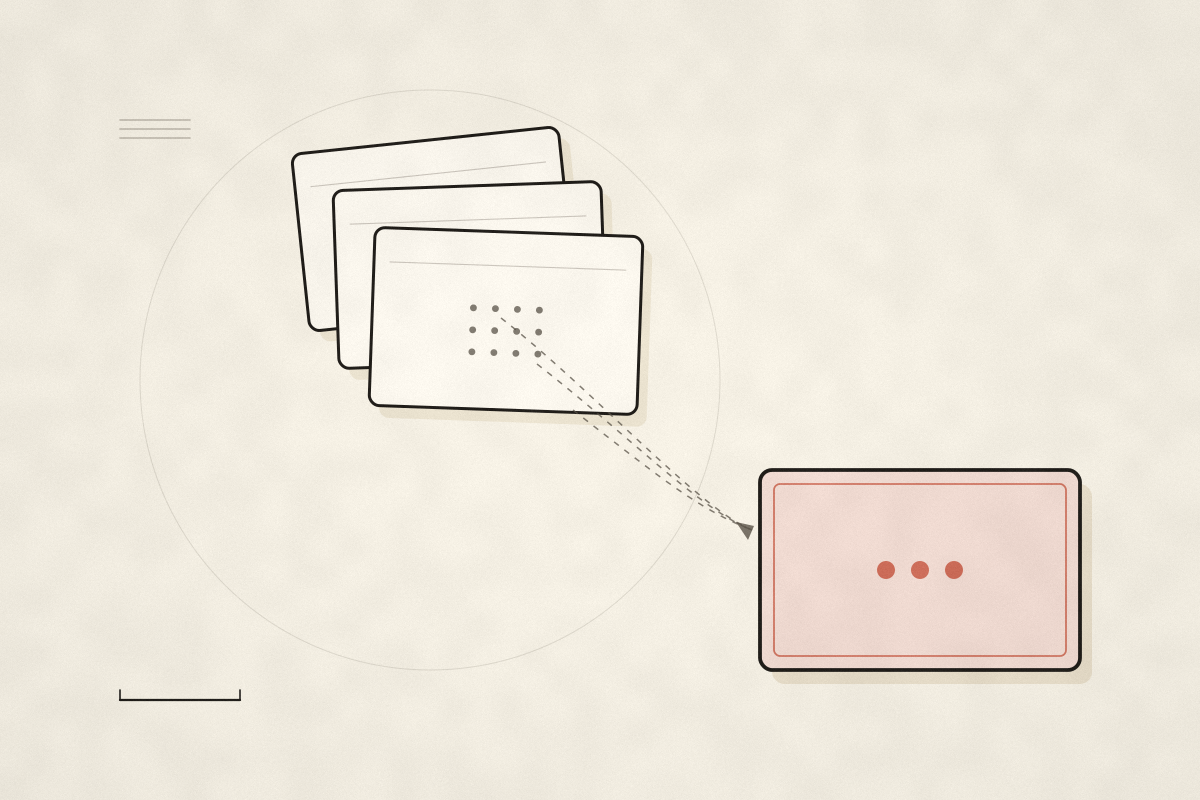
Figure 3. A worked example: several digit cards converge on one final card.
Common Mistakes When Calculating a Life Path Number
Using only the day, or only the year. The life path uses the complete date. The day alone gives the “birthday number,” a different figure.
Reducing 11, 22 or 33 by accident. If your chosen system keeps master numbers, stop at those values. Writing 11/2 is a compromise some authors use to show both readings.
Mixing name numbers into the life path. Expression, soul-urge and personality numbers come from letters, not the birth date. Adding them to the life path is a category error.
Using a two-digit year. Write 1987, not 87. Dropping the century changes the digits and therefore the result.
Assuming a wrong birth date is harmless. An incorrect day or month produces a different number with no way to detect the error from the result alone.
Treating the keywords as a diagnosis. The traits in the chart are folk associations, not psychological findings. There is no evidence linking birth dates to personality or outcomes.
Frequently Asked Questions About Life Path Numbers
What is my life path number if my birthday is on the 11th? The day alone is 11, but your life path still uses the full date. A date summing to 11 at the final stage is kept as 11 in master-number systems; a date that merely contains an 11 is not special.
Is life path number 33 real? It appears in many modern systems as a master number, but classical or strict single-digit systems reduce it to 6. Both are internally consistent conventions.
Which numerology system should I use? The Pythagorean digit-to-letter table is the most common in English-language calculators; Chaldean and other systems use different mappings and produce different numbers. Pick one and stay with it.
Does the life path number ever change? No. It is fixed by your birth date. The personal year number, by contrast, changes annually.
Can two people share a life path number? Yes — millions of people share each of the nine values (or eleven, counting master numbers). That alone shows it cannot function as an individual predictor.
Is numerology scientific? No. It is a symbolic tradition with no demonstrated predictive validity; controlled studies do not support links between birth dates or names and personality or life outcomes.
Where can I try a related number tool? The personal fortune-digit lucky number generator uses a similar birth-date premise; the full calculator directory lists others.
Further Reading and a Note on Scope
If the numerical side of these traditions appeals to you, you may also enjoy Feng Shui: The First Study — The 3,000-Year-Old Blueprint for Wealth, Love & Luck, which looks at how another classical system reads meaning from orientation and number. Companion articles in this series cover lucky numbers from a birth date, personal year numbers and name numbers.
This article is presented for cultural, educational and entertainment purposes only. Numerology is a symbolic belief system; nothing here is professional psychological, financial, medical or legal advice.