Short answer: To find lucky numbers from your date of birth, reduce the day, month and year to single digits, keep any digits that repeat, and treat that short set — together with their sums — as your personal numbers. There is no single official method, so an honest answer is a small list of derived digits rather than one “magic” number.
Key takeaways
– “Lucky numbers” have no canonical definition; different systems derive them differently from the same birth date.
– The three most common approaches are digit reduction, keeping the raw day/month digits, and noting repeated digits.
– A date such as 14 July 1987 can reasonably yield 1, 4, 7, 5 and 1 depending on the method — which is why a set is more honest than a single value.
– Repeating sequences (11, 22, 7-7) are a cultural pattern, not a signal.
– This is a symbolic and entertainment practice with no predictive validity.
What Are “Lucky Numbers”?
A “lucky number” is a digit or number a person treats as personally auspicious — something they might pick for a seat, a date, a ticket or a password they can remember. Different cultures get there by different routes: some use numerology, some use the sounds of words (Cantonese homophones make 8 auspicious and 4 avoided), some use religious or historical associations (7 in many Western contexts), and some simply reuse a birthday.
The birth-date approach is popular because it is personal and requires no special knowledge: your date of birth is already a string of digits, so any rule that extracts a subset of them feels “yours.” That personalisation is the whole appeal. It is also why there is no authoritative answer — with a dozen digits to work from, you can construct dozens of plausible rules.
For a tool that turns a birth date into a single personal fortune digit, see the personal fortune-digit lucky number generator; the full calculator directory lists other number-based tools.
Three Common Ways to Derive Lucky Numbers from a Birth Date (Step by Step)
Use 14 July 1987 as the running example: written as digits, 14 / 07 / 1987.
Method A — Reduce everything to one digit. Add all digits: 1+4+0+7+1+9+8+7 = 37; then 3+7 = 10; then 1+0 = 1. The single “lucky number” is 1. This is identical to the life path calculation, which is why the two are often conflated.
Method B — Keep the raw components. Reduce day, month and year separately: day 14 → 5; month 07 → 7; year 1987 → 1+9+8+7 = 25 → 7. That gives the set {5, 7, 7}, or simply {5, 7}. Some people also keep the unreduced day (14) and year (1987) as “numbers” in their own right.
Method C — Note repeating digits. Look for digits that appear more than once. In 14 / 07 / 1987, the digit 7 appears twice and 1 appears twice. Repeats are then treated as emphasised: {1, 7}. A date with a doubled digit such as 11 or 22 is often kept whole rather than reduced.
Step 4 — Build a small set, not a verdict. Combine two or three methods and keep the numbers that survive more than one of them. For our example, 1 and 7 show up repeatedly, so {1, 7} is a defensible “lucky set.” Write down the rule you used, because otherwise the result is unrepeatable.
Step 5 — Sanity-check the claim. No step here changes probability. The value is mnemonic and playful: a small, memorable set you can use when a form asks you to pick a number.
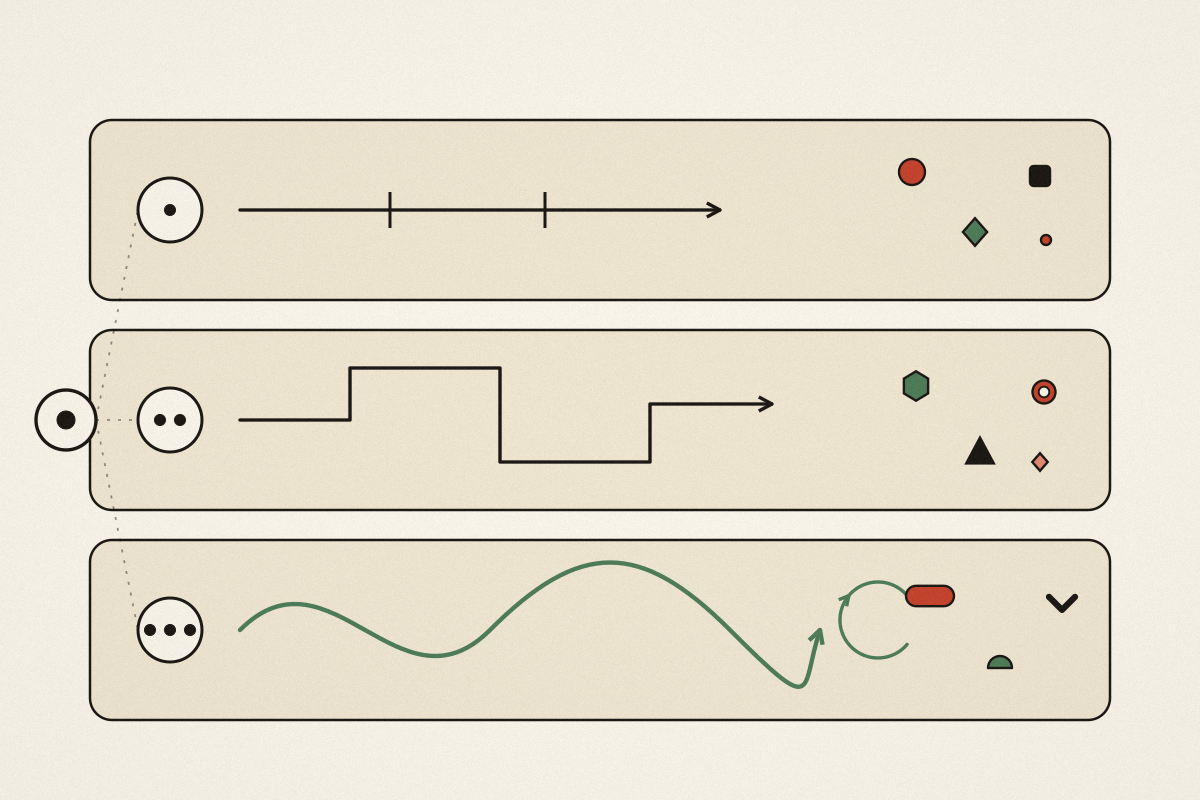
Figure 1. Three methods running in parallel from the same birth date.
Worked Examples (Quick-Reference Chart)
| Birth date | Full-digit sum (Method A) | Component set (Method B) | Repeats (Method C) |
|---|---|---|---|
| 14 Jul 1987 | 37 → 10 → 1 | {5, 7, 7} | {1, 7} |
| 5 May 1985 | 5+5+1+9+8+5 = 33 → 6 | {5, 5, 5} | {5} |
| 29 Feb 1992 | 2+9+0+2+1+9+9+2 = 34 → 7 | {2, 2, 3} | {2, 9} |
| 11 Nov 1990 | 1+1+1+1+1+9+9+0 = 23 → 5 | {2, 2, 1} | {1, 9} |
Note how the same date yields different outputs under different rules, and how a date full of one digit (5 May 1985) collapses to a very small set. That is the method, not a discovery about the person.
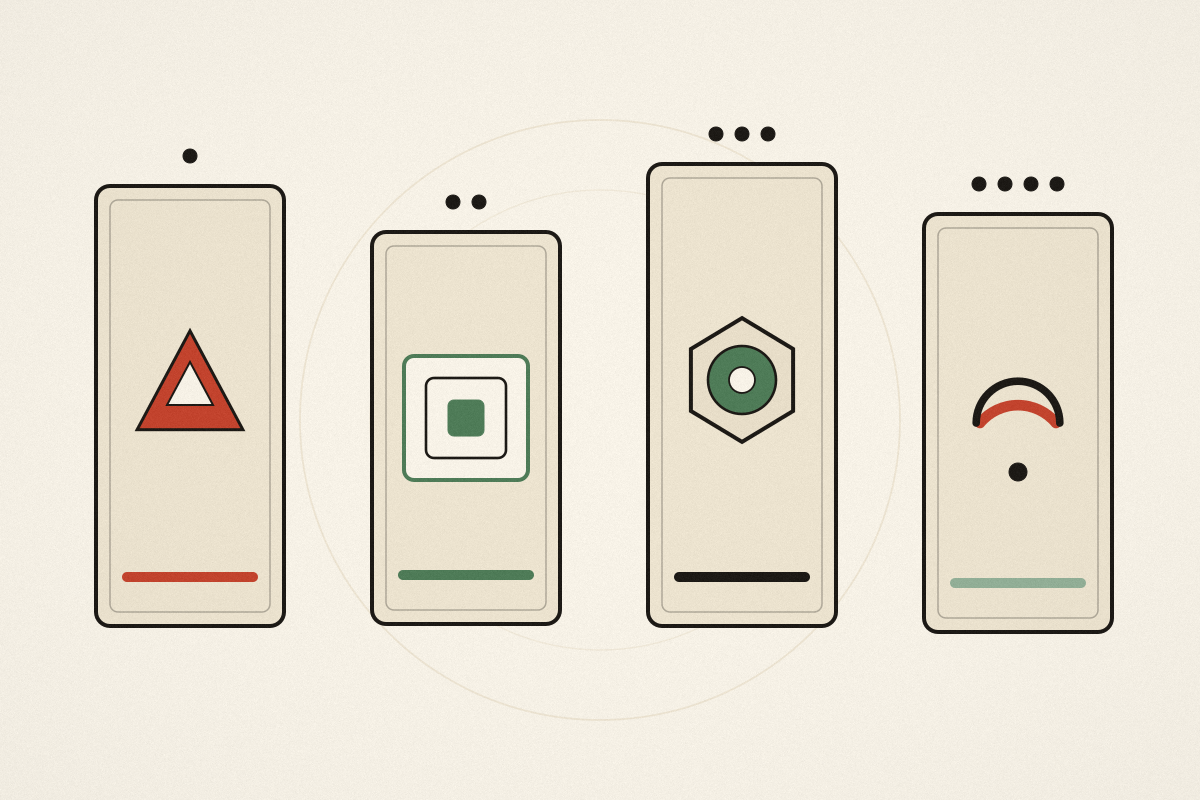
Figure 2. Four methods, four different results from the same input.
Lucky Numbers vs. Life Path Number: What Is the Difference?
They overlap but are not the same thing. The life path number is one specific value with a fixed rule (full-digit sum, reduced, with master numbers retained) and a surrounding interpretive vocabulary. Lucky numbers are an open-ended set with no agreed rule and no fixed interpretation — they are just digits you favour.
In practice, most people who ask for “lucky numbers from my date of birth” are given their life path number plus a couple of component digits, dressed up as a list. That is fine as entertainment, but it is worth knowing that the underlying arithmetic is often the same operation. If you want the stricter single-number version with its conventional meanings, a companion article on the life path number covers it; articles on personal year numbers and name numbers cover the other derivations in this family.
Repeating Numbers and Cultural Shortcuts
Repeating digits get special treatment in almost every system. Doubles such as 11, 22 and 33 are kept intact in Pythagorean numerology as “master numbers”; triples such as 777 or 888 are treated as especially auspicious in popular culture, often for reasons of sound or visual symmetry rather than any calculation. Cantonese and Mandarin homophones add another layer: 8 (ba) sounds close to “prosper” and 4 (si) close to “death,” which is why some buildings skip the fourth floor and why 8-heavy numbers are prized.
These are cultural associations, not properties of the digits. A useful way to hold them: enjoy them the way you would enjoy a birthday or an anniversary — a personal convention that makes an arbitrary choice feel intentional.
Figure 3. Repeated digit shapes, drawn as a rhythm rather than a value.
Common Mistakes
Believing there is one correct method. There is not. Ask which rule a calculator uses before trusting its output.
Using a two-digit year. Write 1987, not 87; dropping the century changes the digits and the result.
Ignoring the birth-date boundary cases. If your “date of birth” is uncertain or recorded in a different calendar, the derived digits change with it.
Mixing name numbers in. Expression and soul-urge numbers come from letters. Adding them to a birth-date set produces a number that belongs to no system.
Cherry-picking after the fact. Deciding a number is lucky because something good happened on that date is selection bias, not derivation.
Treating the result as a gambling strategy. Lottery draws and similar games are independent random events; a favourite digit does not change their odds.
Frequently Asked Questions
What are my lucky numbers if I was born on 14 July 1987? Depending on the rule: 1 (full-digit reduction), {5, 7} (component digits), or {1, 7} (repeats). There is no single official answer.
Is my lucky number the same as my life path number? Often yes, if you use the full-digit reduction method — that is precisely the life path calculation. Other methods give different sets.
Should master numbers 11, 22 and 33 be reduced? In Pythagorean numerology they are kept intact; in strict single-digit systems they reduce to 2, 4 and 6. State which convention you use.
Does 8 really bring luck? Its auspicious status comes from Chinese homophones and cultural convention, not from any measured effect.
Can my lucky numbers change? Only if you change the rule. Some people adopt a “lucky number of the year” from a personal-year calculation, but that is a different system.
Are lucky numbers from a birth date scientifically valid? No. They are a symbolic personalisation of an arbitrary digit string, with no demonstrated predictive power.
Where can I generate one? The personal fortune-digit lucky number generator produces a single digit from your input; the calculator directory lists alternatives.
Further Reading and a Note on Scope
If the wider tradition behind number and direction interests you, Feng Shui: The First Study — The 3,000-Year-Old Blueprint for Wealth, Love & Luck sets these ideas in their historical context. Companion pieces in this series cover life path numbers, personal year numbers and name numbers.
This article is presented for cultural, educational and entertainment purposes only. Lucky numbers are a symbolic belief, not professional financial, gambling, psychological or legal advice.