Short answer: A BaZi chart (Four Pillars of Destiny) is built from four pairs of characters — one pair each for your birth year, month, day and hour. Each pair combines a heavenly stem and an earthly branch, giving eight characters in total. The day stem, called the day master, is treated as the center of the chart, and a reading looks at how the other seven characters relate to it.
Key takeaways
– BaZi means “eight characters”: four pillars, each made of one heavenly stem and one earthly branch.
– The four pillars come from birth year, month, day and hour — not from the zodiac animal alone.
– The year boundary falls at Li Chun (“Start of Spring,” usually 3–5 February), not 1 January; the month boundaries are solar terms, not calendar months.
– The day stem is the “day master” and is the reference point for most interpretations.
– BaZi is a cultural divination tradition with no demonstrated predictive validity.
What Is a BaZi Chart?
BaZi (八字, “eight characters”), also called the Four Pillars of Destiny (四柱), is a Chinese method of recording a birth moment and reading it through the framework of yin-yang and the five phases (wood, fire, earth, metal, water). Where the popular Chinese zodiac uses just the birth-year branch, BaZi records four time units — year, month, day, hour — and gives each a stem-branch pair. That is eight characters, and a table of them is a chart.
The system is calendrical, not astronomical in the modern sense: it uses the traditional sexagenary cycle, a 60-step loop formed by combining the ten heavenly stems with the twelve earthly branches. Each year, month, day and hour has a stem-branch label that advances along that cycle. Compiling a chart is therefore a calendar conversion exercise; interpreting it is where the tradition’s symbolic layer begins.
If you want to see the simpler, single-branch version first, the zodiac compatibility checker works from birth years alone, and the full calculator directory lists other tools. A chart with four pillars is a substantially bigger object than an animal match.
The Four Pillars: Year, Month, Day and Hour (Step by Step)
Step 1 — Fix the exact birth date and time. The hour pillar depends on the two-hour period of birth, so an approximate time can change one of the four pillars. Traditional practice also distinguishes local solar time from clock time; whether a given calculator adjusts for longitude is worth checking.
Step 2 — Determine the year pillar using Li Chun. The BaZi year begins at Li Chun, “Start of Spring,” a solar term usually falling on 3 or 4 February. Someone born on 2 February 1990 still carries the previous year’s pillar. This differs from the lunar-new-year boundary used for the popular zodiac, so the two systems can disagree for several weeks.
Step 3 — Determine the month pillar using solar terms. BaZi months are not calendar months and not lunar months; each begins at one of twelve “jie” solar terms (roughly the 4th–8th of each Gregorian month). A birth on 6 March, for example, belongs to the second BaZi month. This is the step most beginner tools get wrong.
Step 4 — Determine the day pillar. Day pillars advance one step per day along the 60-cycle, with a convention about when the day changes (midnight or the start of the zi hour, 23:00). Because this is a continuous count, it is best taken from a calibrated calendar or ephemeris rather than computed by hand.
Step 5 — Determine the hour pillar. Each earthly branch covers a two-hour period; the hour stem is derived from the day stem by a fixed rule (the “five rat” method). The zi hour spans 23:00–01:00, which is why late-night births are a classic edge case.
Step 6 — Lay out the four pairs. Write them left to right as year, month, day, hour, each as stem-over-branch. You now have the eight characters.
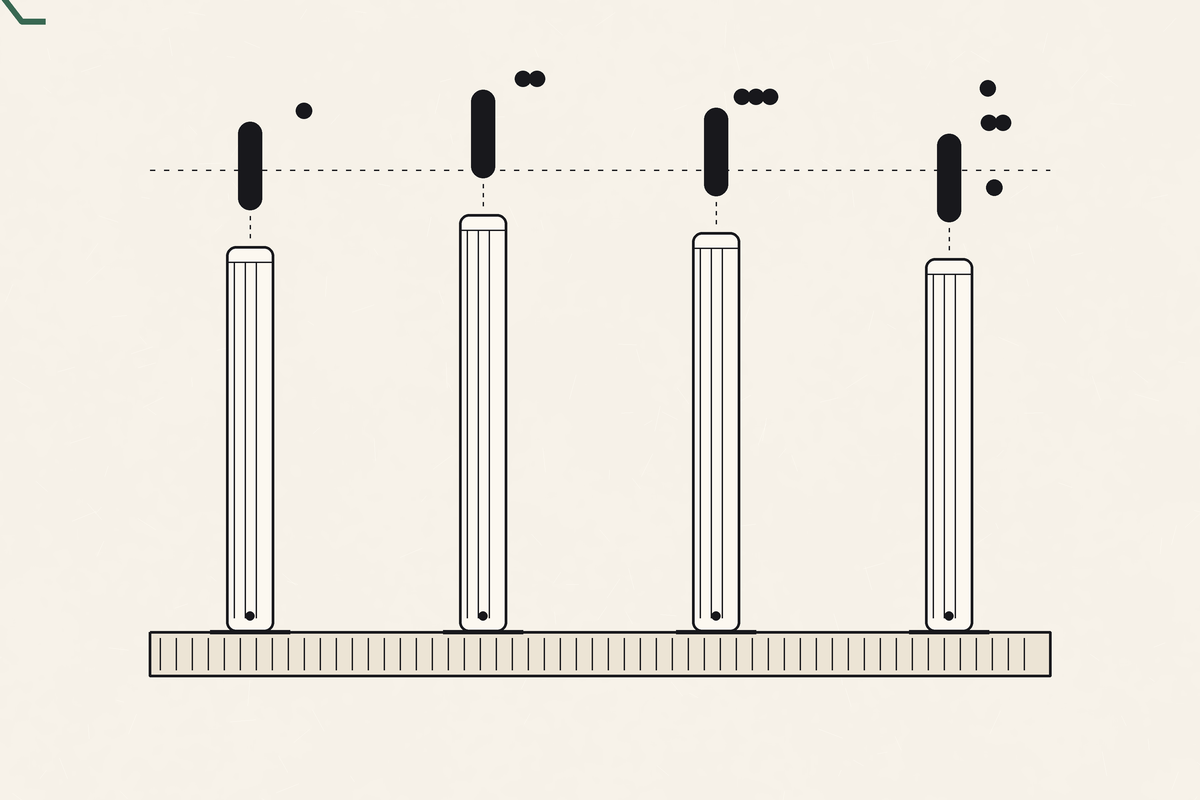
Figure 1. Each pillar carries a stem and a branch.
Heavenly Stems and Earthly Branches (Quick-Reference Chart)
The ten stems alternate yin and yang across the five phases; the twelve branches carry the zodiac animals and the double-hours.
| # | Heavenly stem | Phase / polarity | Earthly branch | Zodiac | Approx. hour |
|---|---|---|---|---|---|
| 1 | Jia | Wood, yang | Zi | Rat | 23:00–01:00 |
| 2 | Yi | Wood, yin | Chou | Ox | 01:00–03:00 |
| 3 | Bing | Fire, yang | Yin | Tiger | 03:00–05:00 |
| 4 | Ding | Fire, yin | Mao | Rabbit | 05:00–07:00 |
| 5 | Wu | Earth, yang | Chen | Dragon | 07:00–09:00 |
| 6 | Ji | Earth, yin | Si | Snake | 09:00–11:00 |
| 7 | Geng | Metal, yang | Wu | Horse | 11:00–13:00 |
| 8 | Xin | Metal, yin | Wei | Goat | 13:00–15:00 |
| 9 | Ren | Water, yang | Shen | Monkey | 15:00–17:00 |
| 10 | Gui | Water, yin | You | Rooster | 17:00–19:00 |
| 11 | — | — | Xu | Dog | 19:00–21:00 |
| 12 | — | — | Hai | Pig | 21:00–23:00 |
The stems and branches combine in a fixed 60-step cycle (jia-zi, yi-chou, bing-yin, and so on), which is why only 60 of the 120 conceivable pairs occur. A chart is simply four positions plucked from that cycle.
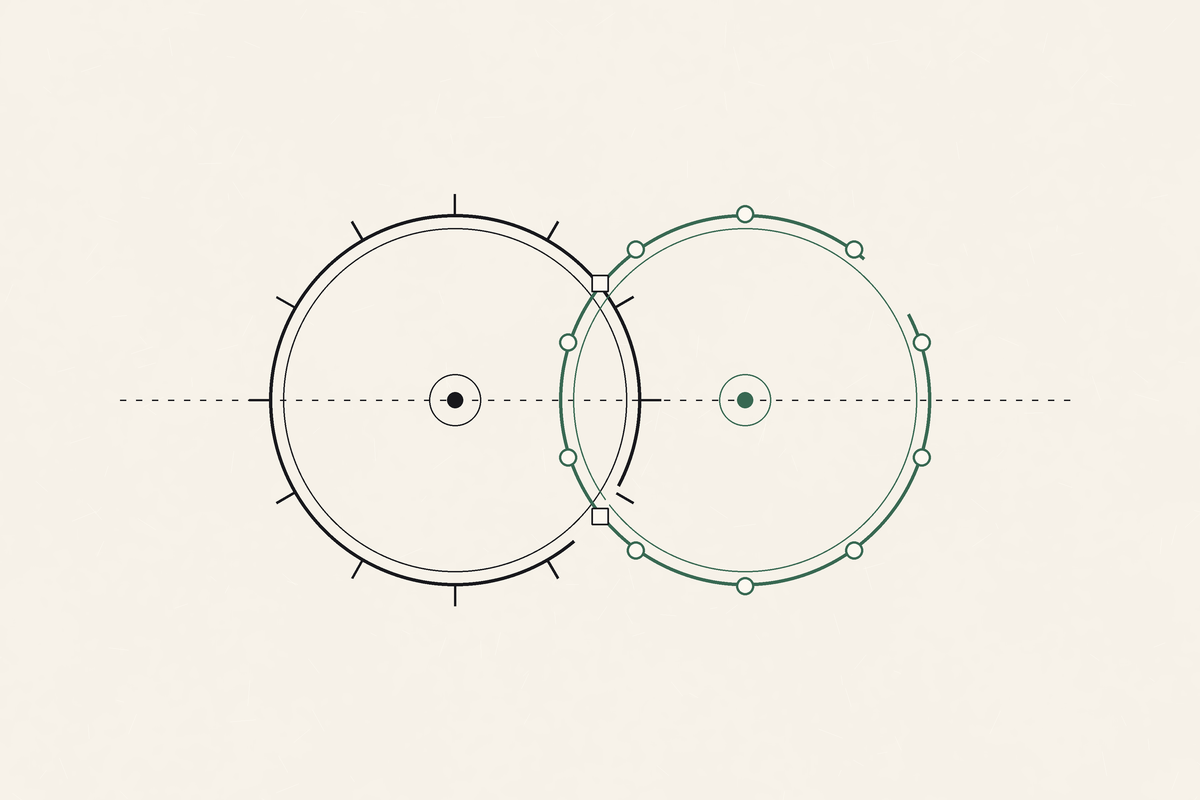
Figure 2. The ten stems and twelve branches interleave into a sixty-step cycle.
The Day Master: Why the Day Pillar Is the Center
The heavenly stem of the day pillar is called the day master (or “self”), and it represents the person in the chart. Every other character is read in relation to it: which phases support it, which drain it, which it controls, and whether the chart as a whole is “strong” or “weak.” That assessment then leads to the idea of favourable or “useful” phases, which is the backbone of most traditional interpretation.
This is a structural point worth grasping before any interpretation: a BaZi reading is not a list of eight independent traits. It is a relational exercise with one reference point. The year pillar is often said to relate to early life or ancestry, the month to career and the immediate environment, the hour to later life or children — but those assignments are conventions of interpretation, not properties of the calendar.
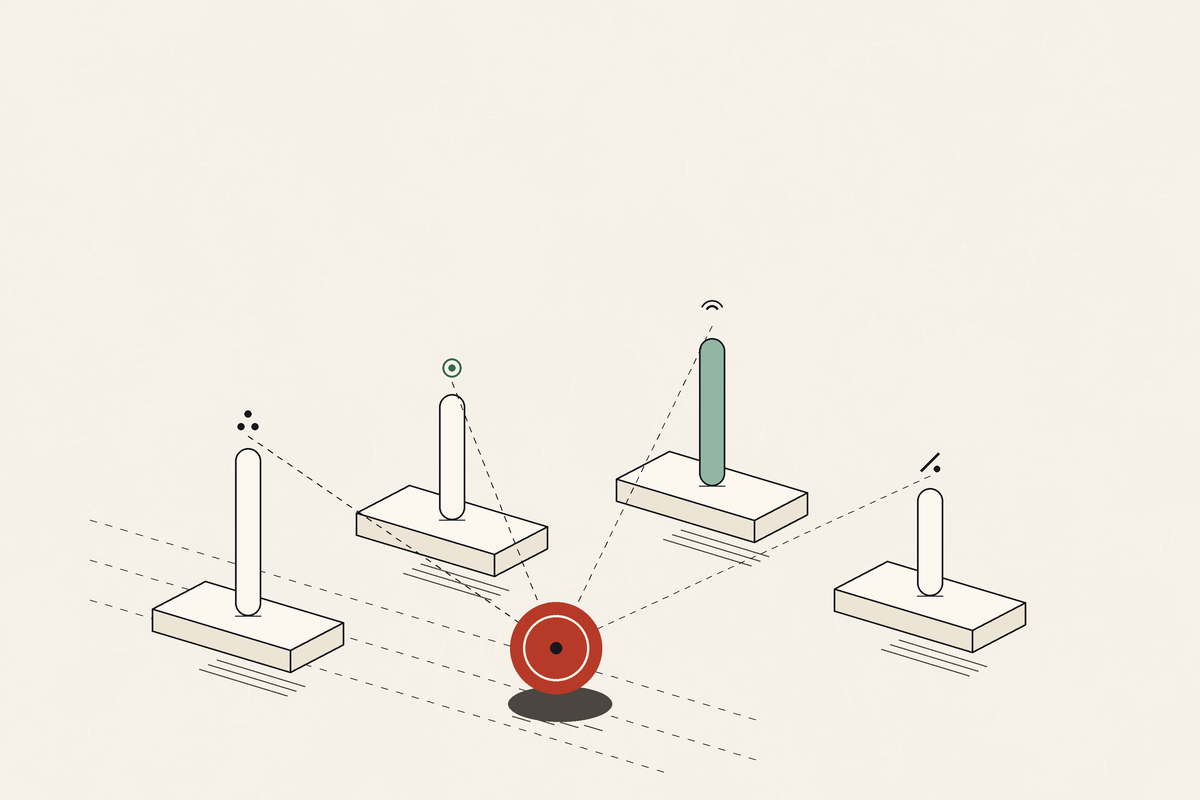
Figure 3. One central token among the four pillars.
What a Reading Typically Looks At
A full traditional reading considers the balance of the five phases, the seasonal strength of the day master (a wood day master born in spring is read differently from one born in autumn), the combinations and clashes among branches, the “ten gods” relationships derived from the stems, and the sequence of luck pillars (da yun) that follow the birth chart through life. Each of those is a layer with its own rules and its own schools of thought.
That complexity is exactly why beginner guides stop at chart construction. Two competent practitioners using different schools can produce different readings from the same eight characters, and there is no external standard that adjudicates between them. If you are exploring the tradition, the useful first milestone is being able to construct a chart correctly — including the Li Chun and solar-term boundaries — rather than being able to interpret one.
Companion articles in this series cover the simpler zodiac-animal method, life path numbers and personal year numbers; those are separate systems, not simplified versions of BaZi.
Common Mistakes for Beginners
Using 1 January as the year boundary. The BaZi year starts at Li Chun in early February. January and very early February births often belong to the previous year.
Using calendar months for the month pillar. BaZi months begin at solar terms, roughly the 4th–8th of each Gregorian month. This is the most common construction error.
Treating the zodiac animal as the whole chart. The animal is the year branch only — one of eight characters.
Ignoring the birth time. The hour pillar is one of the four; an uncertain time means an uncertain chart, not a slightly less precise one.
Mixing midnight and 23:00 day-change conventions. Some schools roll the day at midnight, others at the start of the zi hour. Pick one and note it.
Reading “strong” or “weak” as a value judgement. They are technical labels about phase balance, not assessments of a person.
Expecting predictive accuracy. No controlled evidence supports BaZi as a predictor of personality or life outcomes.
Frequently Asked Questions
What are the Four Pillars? The year, month, day and hour of birth, each expressed as a heavenly stem and an earthly branch — eight characters in total.
Is BaZi the same as the Chinese zodiac? No. The zodiac uses the birth-year branch alone; BaZi uses four stem-branch pairs.
Why does my BaZi year differ from “my” zodiac animal? Because BaZi uses Li Chun (early February) while the popular zodiac generally uses the lunar new year. The two boundaries can be weeks apart.
Do I need my exact birth time? Yes, for the hour pillar. Without it you can construct three pillars but not a full chart.
What is the day master? The heavenly stem of the day pillar, used as the reference point for interpreting the other seven characters.
Can two people have the same chart? Yes — the same four pillars recur on a 60-year cycle, and many people share a birth hour within a given day.
Is BaZi scientific? No. It is a traditional symbolic system with demonstrated cultural significance but no demonstrated predictive validity.
Where can I explore related tools? The zodiac compatibility checker covers the single-branch version, and the calculator directory lists others.
Further Reading and a Note on Scope
BaZi shares its vocabulary of stems, branches and phases with the wider Chinese correlative traditions, including the direction-based Feng Shui schools. For the historical background to that shared framework, see Feng Shui: The First Study — The 3,000-Year-Old Blueprint for Wealth, Love & Luck. Companion articles in this series cover zodiac compatibility, lucky numbers and name numbers.
This article is presented for cultural, educational and entertainment purposes only. BaZi is a traditional divination system; nothing here is professional psychological, medical, financial or legal advice.