Short answer: In the Eight Mansions (Ba Zhai) school, your Kua number places you in either the East Group or the West Group, and each group has four favourable directions. The usual advice is to sleep with the crown of your head pointing toward one of those four directions — East Group toward north, east, south-east or south; West Group toward west, north-west, south-west or north-east.
Key takeaways
– “Sleeping direction” in this tradition means the direction the crown of your head points while lying down, not the direction your feet face or the direction the room’s door opens.
– Your Kua number is calculated from birth year and sex; it assigns you to the East Group (1, 3, 4, 9) or West Group (2, 5, 6, 7, 8).
– Each group has four favourable directions; the individual ranking of those four (sheng qi, tian yi, yan nian, fu wei) differs by lineage.
– Practical bedroom constraints — windows, radiators, door sightlines, a shared bed — usually override the symbolic preference, and that is fine.
– There is no evidence that head orientation changes sleep quality or fortune; treat this as cultural practice.
What “Sleeping Direction” Means in Feng Shui
The question “which way should I face when I sleep?” appears in several traditions, and they do not all mean the same thing. In the Eight Mansions school the recommendation is personal: it comes from your Kua number, and it is expressed as one of eight compass directions. When a practitioner says “sleep facing east,” they mean the top of your head points east, so that (in the traditional phrasing) you “receive” the qi from that bearing.
Other advice you will encounter is not personal at all: some schools advise against pointing your feet directly at the bedroom door (the so-called “coffin position”), others warn against a headboard under a window or against aligning the bed with a door-to-window draught. Those are about the room, not about your birth year, and they often overlap with ordinary comfort advice — a draught, a lack of visual privacy, or glare really does affect sleep. Keeping the two categories separate is the first step to reading any of this sensibly.
If you want to see the direction-based method applied mechanically, the Feng Shui home audit tool for Kua number, facing directions and Flying Stars combines the personal and spatial readings, and the Ba Zhai and Flying Stars home compass shows the bearing-first approach.
How to Find Your Four Best Directions from Your Kua Number (Step by Step)
Step 1 — Fix the correct birth year. Eight Mansions uses the lunar/solar-year boundary (Li Chun, “Start of Spring,” usually 3–5 February), not 1 January. A January or very early February birthday belongs to the previous year in most schools. A companion article on Kua numbers walks through that boundary in detail.
Step 2 — Reduce the year to a single digit. Add the digits of the birth year and reduce. For 1987: 1+9+8+7 = 25 → 2+5 = 7.
Step 3 — Apply the sex-specific formula. In the widely taught modern convention: for males, subtract the reduced digit from 11 (1987 male: 11−7 = 4); for females, add 4 to the reduced digit (1987 female: 7+4 = 11 → 2). Reduce any two-digit result to one digit, and treat 5 as a special case — traditionally Kua 5 is folded into 2 for men and 8 for women, because there is no fifth “palace” in the eight-direction scheme. People born in 2000 or later are handled differently by different lineages, so this is an area where a calculator applying one consistent rule set is more reliable than a manual shortcut.
Step 4 — Assign the group. Kua 1, 3, 4 and 9 belong to the East Group; Kua 2, 5, 6, 7 and 8 belong to the West Group.
Step 5 — Read off the four favourable directions. East Group: north, east, south-east, south. West Group: west, north-west, south-west, north-east. Pick one that your room can actually accommodate, then check the physical setup below.
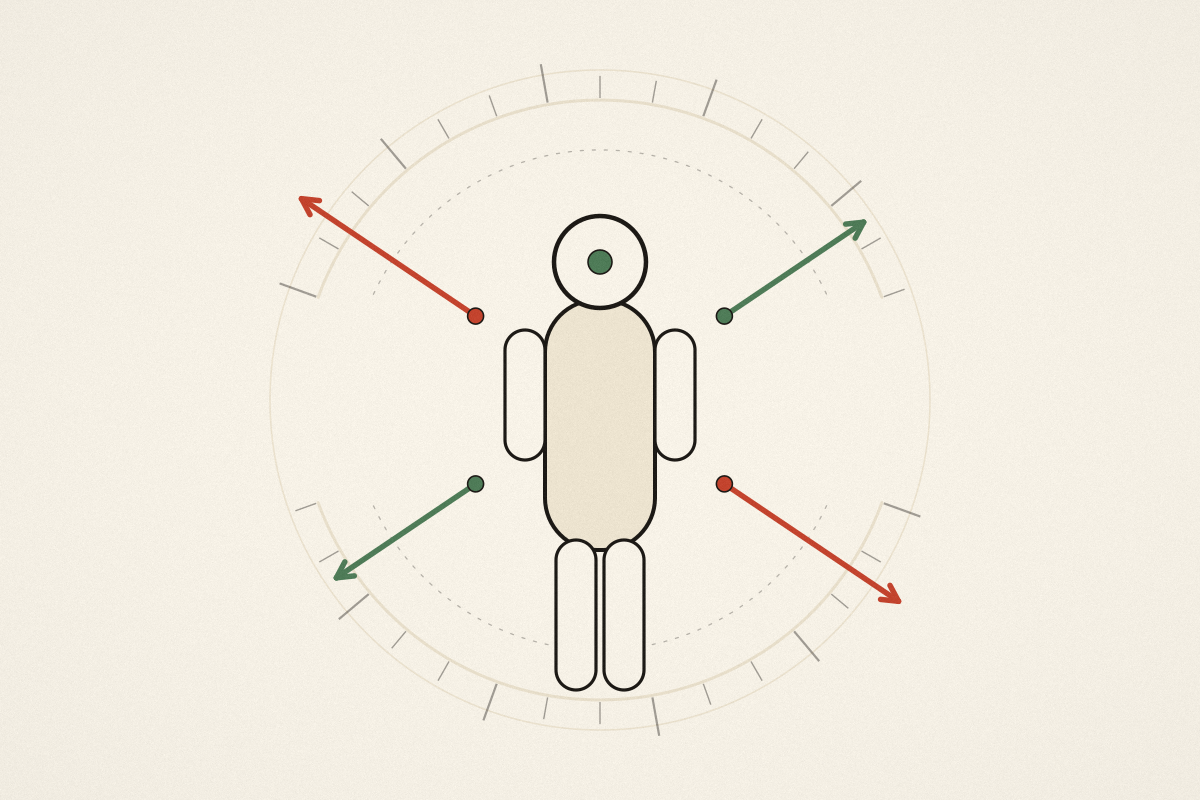
Figure 1. The four favourable bearings around a sleeping figure.
Kua Number to Best Sleeping Directions (Quick-Reference Chart)
| Kua number | Group | Four favourable head directions | Four less-favourable directions |
|---|---|---|---|
| 1 | East | N, E, SE, S | S, SW, NW, NE, W (varies by school) |
| 3 | East | N, E, SE, S | W, NW, NE, SW |
| 4 | East | N, E, SE, S | W, NW, NE, SW |
| 9 | East | N, E, SE, S | W, NW, NE, SW |
| 2 | West | W, NW, SW, NE | N, E, SE, S |
| 5 | West | treated as 2 (men) / 8 (women) | — |
| 6 | West | W, NW, SW, NE | N, E, SE, S |
| 7 | West | W, NW, SW, NE | N, E, SE, S |
| 8 | West | W, NW, SW, NE | N, E, SE, S |
Within each group, the four favourable bearings are ranked differently for each Kua number — sheng qi (prosperity), tian yi (health), yan nian (relationships) and fu wei (stability). Which one is “best for sleep” is usually either fu wei (calm) or tian yi (health), depending on the author. The table gives the group-level set, which is the part all schools agree on; the ranking is where they diverge.
Head Direction vs. Bed Placement: What Actually Gets Adjusted
Two different things are being adjusted, and conflating them causes most of the confusion.
Head direction is a compass bearing applied to your body. In principle you can change it by rotating the bed by 45 or 90 degrees, without moving anything else.
Bed placement is about the bed’s relationship to the room: a solid wall behind the headboard, a clear view of the door from the bed without being directly in line with it, symmetry on both sides (two bedside tables), no heavy beam or shelf directly overhead, and no window immediately behind the head. These are the rules with a plausible comfort rationale — a visible entrance feels secure, a draughty window behind the head is genuinely unpleasant, and a low beam overhead is genuinely oppressive.
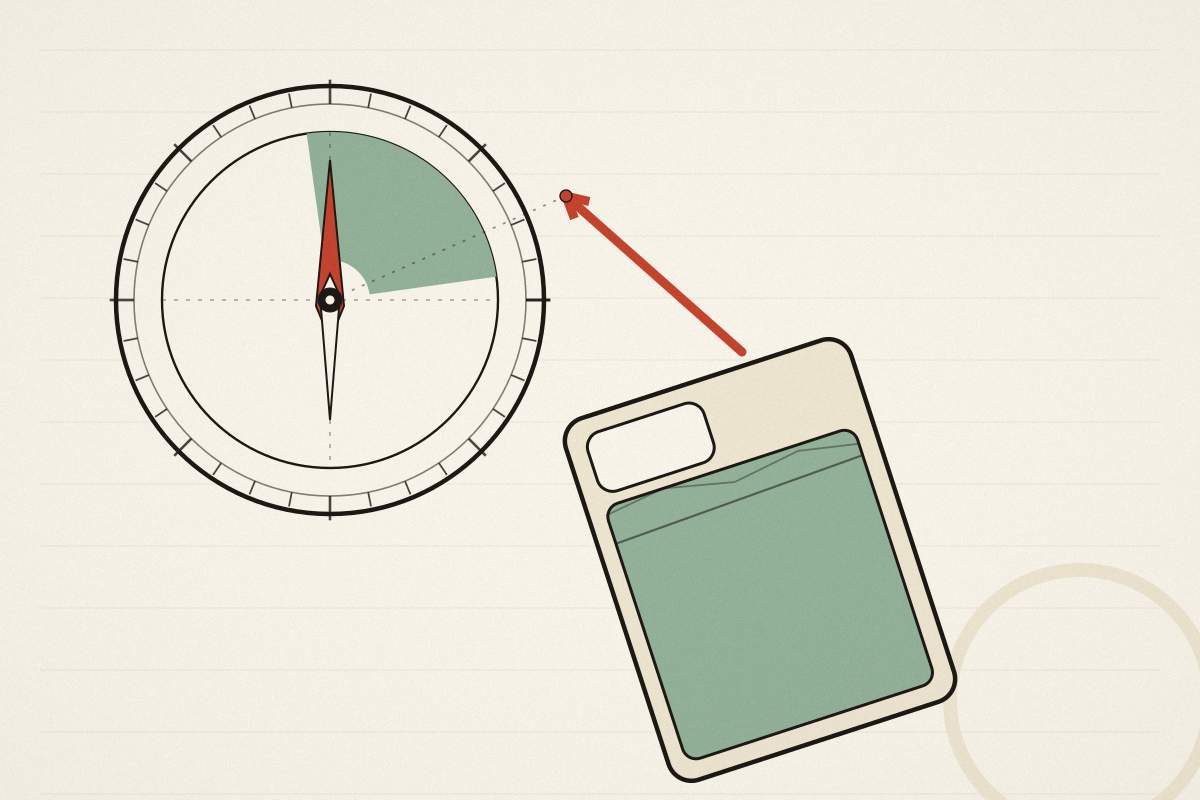
Figure 2. Orientation arrow at the head end, read against a compass arc.
The bedroom bed-placement rules cover that second category in practical detail. If a favourable bearing forces the headboard under a window or into a doorway sightline, the sensible reading is to keep the good placement and accept a different bearing — or to treat the bearing as symbolic and stop worrying about it.
Practical Bedroom Constraints (and How to Work With Them)
A shared bed. Two partners often have Kua numbers in different groups, so their favourable sets do not overlap in the way the tradition would like. There is no canonical tie-break rule; most practitioners pick the direction that suits the room, or the one associated with the person who sleeps less soundly. A companion article on Kua numbers and one on front-door directions cover the underlying method.
Small rooms and fixed features. Radiators, built-in wardrobes, sloped ceilings and a single viable wall frequently leave exactly one orientation available. That is a physical constraint, not a failure of the method.
Magnetic vs. true north. A phone compass reads magnetic north; Eight Mansions directions are conventionally given against the compass, but declination in many locations is small enough that it rarely changes which of eight 45-degree sectors you are in.
Apartment buildings. Steel framing can make indoor compass readings wobble. Take a reading near a window or in the room’s center, and average a few readings.
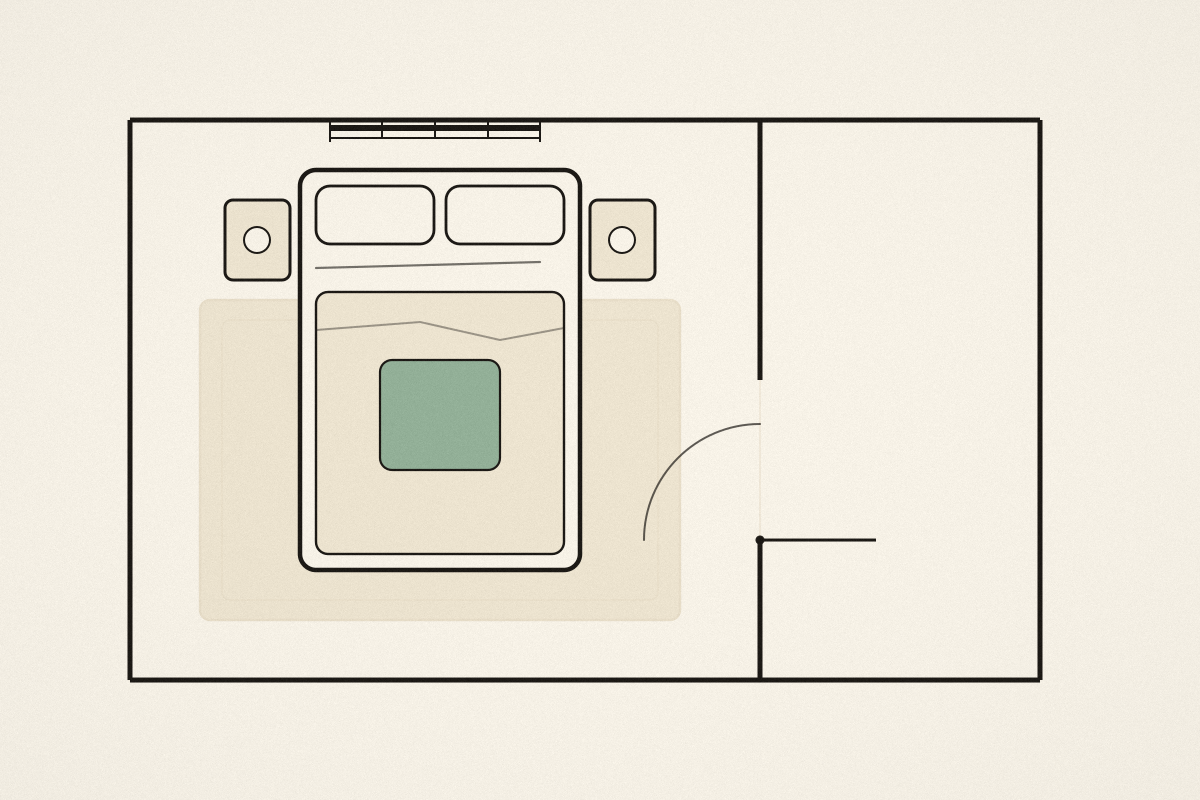
Figure 3. A conventional “command position” layout: solid wall behind, door in view, clear sides.
Common Mistakes
Confusing head direction with foot direction. “Facing east” here means the crown of the head points east.
Using the wrong birth-year boundary. A late-January birthday is the classic error; check Li Chun for the specific year.
Applying the 2000+ formula from a different lineage. Schools disagree about post-2000 births. Use one rule set consistently rather than mixing.
Rotating a bed into a bad position to hit a good bearing. Placement rules with a comfort rationale should win.
Treating a compass reading as exact. The eight sectors are 45 degrees wide; a few degrees of declination or indoor interference rarely matter.
Expecting a measurable outcome. No controlled evidence links head orientation to sleep quality, health or luck.
Frequently Asked Questions
Which direction should I sleep in if my Kua number is 4? Kua 4 is East Group, so north, east, south-east or south; tian yi and fu wei rankings vary by school.
What if my partner and I have different groups? There is no authoritative tie-break. Most practitioners prioritise a sound bed position, or the direction of the lighter sleeper.
Should my feet point toward the door? Conventional advice says no (the “coffin position”), but this is a separate placement rule, not a Kua-number rule.
Does a mirror facing the bed matter? It appears in popular Feng Shui advice, usually about reflections and restlessness; it is not part of the Eight Mansions direction system.
Can I use a phone compass app? Yes, for a 45-degree sector reading. Take several readings away from metal furniture.
Is sleeping direction backed by sleep science? No. Light, noise, temperature, mattress comfort and a consistent schedule are the factors with evidence behind them.
Where can I check my Kua number and directions? The Kua number and facing-direction home audit tool applies one consistent rule set; the calculator directory lists others.
Further Reading and a Note on Scope
Direction rules sit inside a much older tradition connecting spatial arrangement to ideas about wealth, love and fortune. For the historical background, see Feng Shui: The First Study — The 3,000-Year-Old Blueprint for Wealth, Love & Luck. Companion pieces in this series cover Kua numbers, front-door directions and the bagua map.
This article is presented for cultural, educational and entertainment purposes only. Feng Shui is a traditional belief system; nothing here is professional medical, sleep, architectural or financial advice.