Short answer: To find the wealth corner of your home with a bagua map, stand just inside your front door looking in, lay a 3×3 grid over the floor plan so its bottom edge follows the entrance wall, and read the far-left sector — the Xun or “Wind” area — as the corner traditionally linked to prosperity.
Key takeaways
– The bagua (“eight trigrams”) is a 3×3 grid of eight directional sectors around a central hub, each paired with a trigram from the Yijing tradition.
– In the front-door (BTB) method the grid is oriented by the entrance, not by a compass; in the classical compass school it is oriented by real magnetic directions.
– The wealth and prosperity sector is Xun (Wind), which in the front-door layout sits at the far-left corner as you look in from the doorway.
– Irregular floor plans, missing corners and multi-level homes make the mapping approximate rather than exact.
– This is a cultural and symbolic practice. It is not a way to generate income; any benefit comes from tidying, intention and how a space feels to you.
What Is a Feng Shui Bagua Map?
The word bagua literally means “eight trigrams”: the eight three-line figures built from broken and unbroken lines that sit at the heart of the Yijing, or Book of Changes. Feng Shui practitioners later arranged those eight trigrams around a center to form a nine-part diagram — the “nine palaces” or 3×3 grid — and used it as a template for reading a home.
Each of the eight outer sectors carries a trigram, a compass direction, a natural element, and, in later popular Feng Shui, a life area: career, relationships, health, family, wealth, fame, knowledge, and helpful people. The center is the tai ji, the hub that connects everything else. It is worth being clear about what this is: a symbolic map from a living cultural tradition, not a physical measurement. If you want the historical backdrop rather than the how-to, Feng Shui: The First Study — The 3,000-Year-Old Blueprint for Wealth, Love & Luck places the trigrams and their associated ideas in their longer context.
Two broad schools use the grid differently, and confusing them is the single biggest source of contradictory advice online.
The Two Schools: Compass Alignment vs. Front-Door Alignment
The compass school (often linked to Xuan Kong and Ba Zhai / Eight Mansions methods) fixes the grid to real compass bearings: the sector for “north” always sits at magnetic north, regardless of where your door is. Practitioners in this tradition read directions, flying stars and a person’s Kua number together. If you want to see how direction-based reading works in practice, the Feng Shui home compass tool for Ba Zhai and Flying Stars shows the direction-first approach, and the Feng Shui home audit tool combines Kua numbers, facing directions and Flying Stars in a single pass.
The front-door school — often called BTB (Western Bagua) or the “Three-Door Method” — ignores compass bearings. Instead it aligns the bottom of the grid with the wall that contains your main entrance. Career sits at the near center (the door wall), fame at the far center, and wealth at the far left. This version became popular in twentieth-century Western Feng Shui because it works without a compass and maps neatly onto an ordinary rectangular floor plan.
Neither is “the correct one” in any measurable sense; they are different conventions from different lineages. The rest of this article uses the front-door method, because it is the one most people mean when they ask how to find the wealth corner of a home with a bagua map.
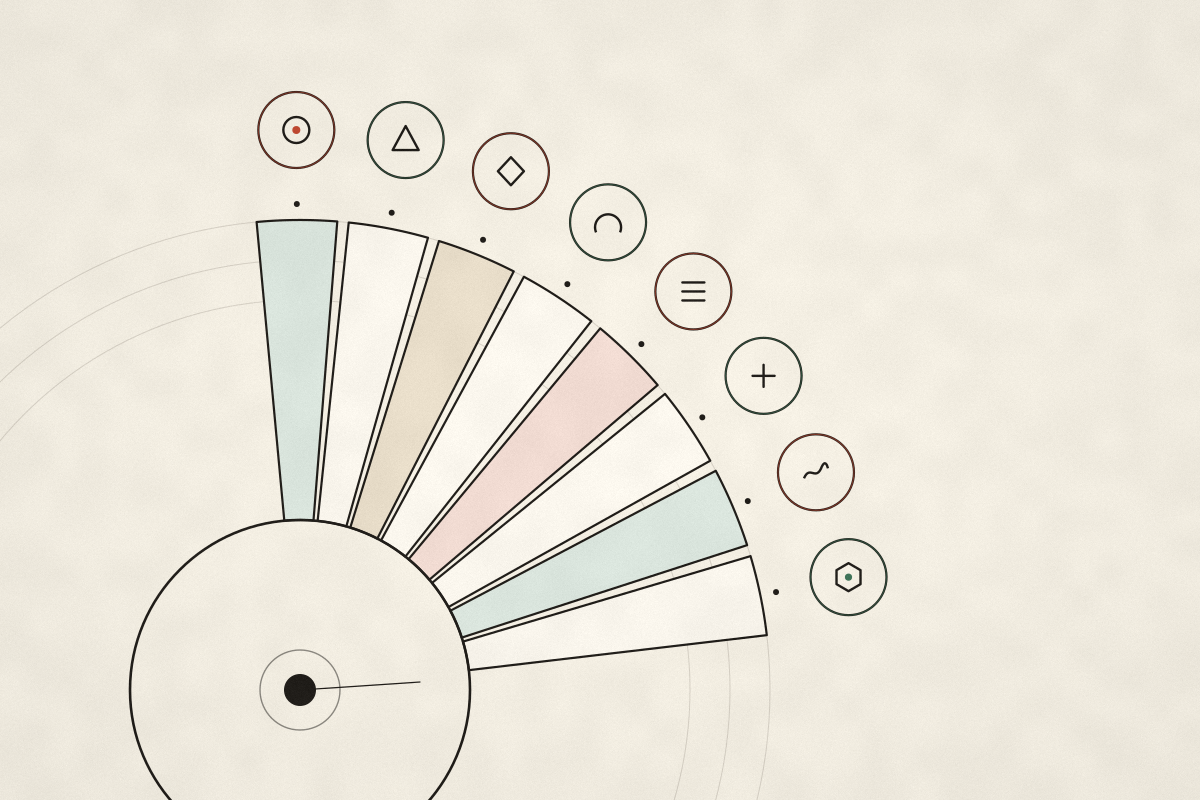
Figure 1. The eight outer sectors, each shown with an abstract emblem rather than a written label.
How to Find the Wealth Corner of Your Home (Step by Step)
Step 1 — Get a floor plan. It does not need to be architectural. Sketch the outline of the level you want to read, marking the main entrance, interior walls and any large cutouts such as a balcony or an L-shaped return.
Step 2 — Stand at the front door. Use the door people actually use as the primary entrance, not a side or back door. Stand just inside it, facing into the home. This viewing direction defines “far” and “near.”
Step 3 — Lay the 3×3 grid over the plan. Draw two horizontal and two vertical lines so the plan is divided into nine roughly equal cells, with the bottom row containing the entrance wall. If your home is L-shaped, extend the grid to the full bounding rectangle first and note which cells are partly missing.
Step 4 — Locate Xun. With the entrance at the bottom center, the far-left cell (top-left of the grid) is Xun, the Wind trigram, the sector popularly labelled wealth and prosperity. The far-right cell is Kun (relationships), the near-left is Gen (knowledge), and the center is the hub.
Step 5 — Check the physical corner. Walk to that far-left area of your home. Note what is actually there: a bedroom corner, a storage pile, a blank wall, a bathroom. In the symbolic reading, a cluttered, broken or neglected corner is “stagnant,” while a clean, lit, intentionally used one is “active.”
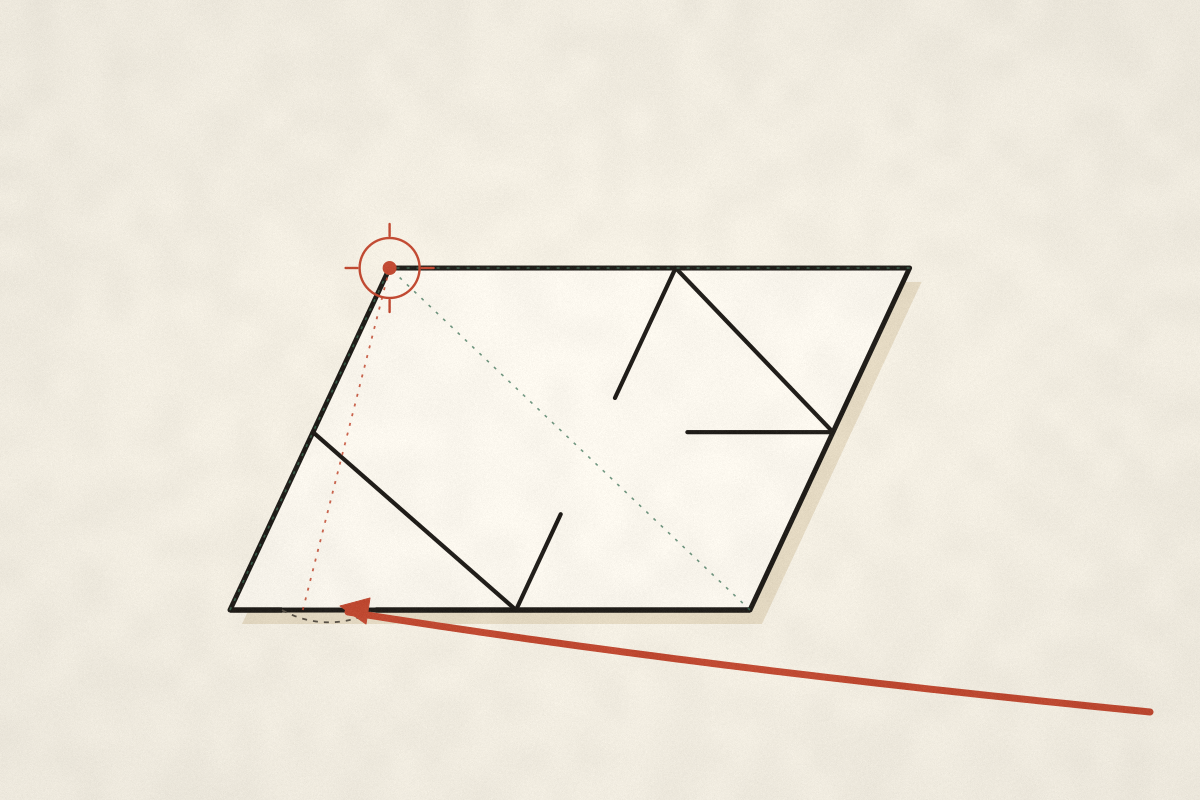
Figure 2. Aligning the grid from the entrance: guide lines converge on the far-left sector.
A useful sanity check: if you instead used a compass and your entrance faces, say, south-east, the compass-school “wealth” position could land somewhere completely different. That is not an error — it is simply the other convention. Decide which school you are following and stay consistent within one reading.
The Eight Trigrams and Life Areas (Quick-Reference Chart)
The table below gives the front-door (BTB) layout, reading from the entrance wall at the bottom.
| Grid position (as seen from the door) | Trigram | Element | Common life-area label |
|---|---|---|---|
| Far left (top-left) | Xun, Wind | Wood | Wealth and prosperity |
| Far center | Li, Fire | Fire | Fame and reputation |
| Far right (top-right) | Kun, Earth | Earth | Relationships and love |
| Mid left | Zhen, Thunder | Wood | Family and health |
| Center | Tai Ji (hub) | — | Balance / whole home |
| Mid right | Dui, Lake | Metal | Children and creativity |
| Near left (bottom-left) | Gen, Mountain | Earth | Knowledge and self-cultivation |
| Near center | Kan, Water | Water | Career and life path |
| Near right (bottom-right) | Qian, Heaven | Metal | Helpful people and travel |
In the compass-school ordering the trigrams sit on their traditional bearings (for example Li at south, Kan at north), so the same table would look rotated. Again: one convention at a time.
What to Do (and Not Do) in the Wealth Corner
Popular advice for the wealth corner is mostly common-sense homemaking dressed in symbolic language, and that is the most defensible way to read it.
Do: clear clutter, repair anything broken, add a light source, keep the area clean, and place one or two objects you genuinely value there — often a healthy plant, a bowl, or a small lamp. Purple, red and deep green are the colours conventionally associated with the sector. The point is to make a neglected corner feel deliberate.
Don’t: expect a return on investment, treat a bathroom or a missing corner as a “curse,” or spend money you cannot afford on remedies. Claims that a mirror, a fountain or a crystal will change your bank balance are marketing, not the tradition.
If you are rearranging furniture as part of this, the practical placement rules matter more than the symbolism. Our guide to desk placement and the bedroom bed-placement rules cover sightlines, support behind a seat or bed, and clearance — all of which affect how a room actually feels. A companion article on front-door directions looks at the entrance itself, and the renovation-date guide covers timing traditions if you are planning work.
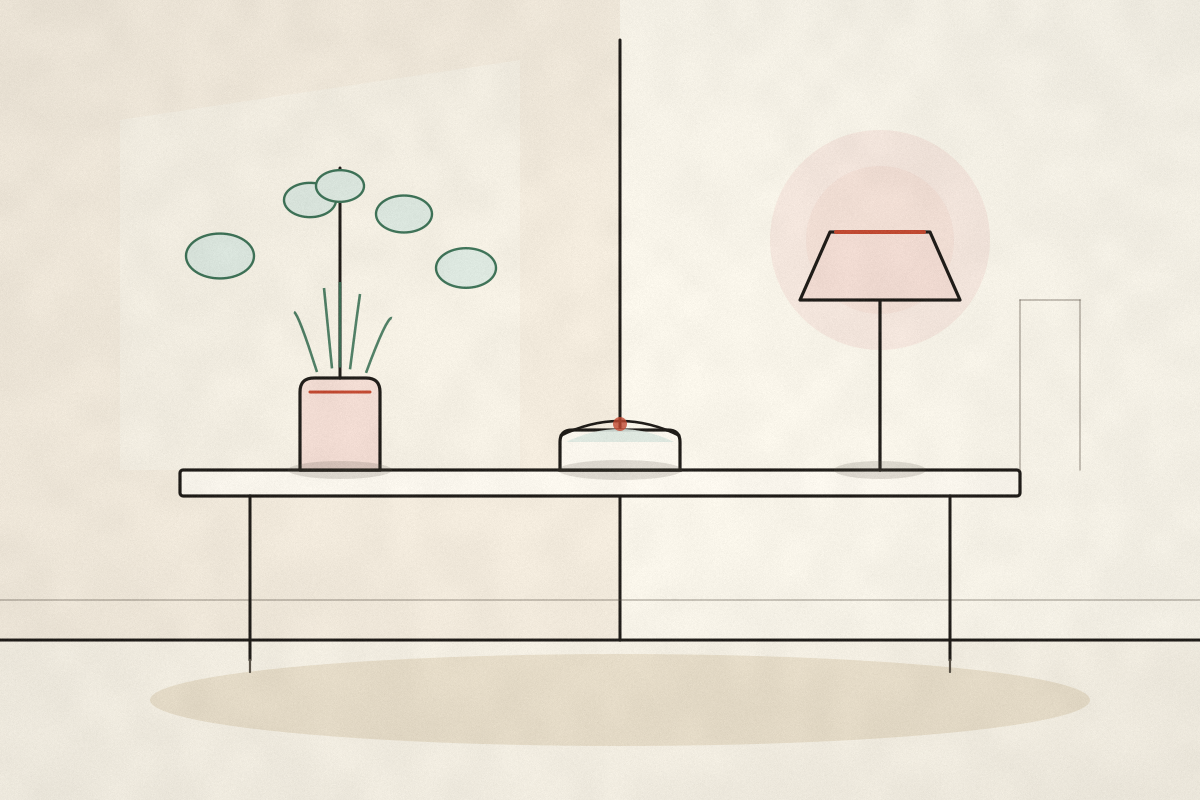
Figure 3. A simple, uncluttered corner arrangement — the practical core of most “activate the wealth corner” advice.
Common Mistakes When Applying a Bagua Map
Mixing the two schools. Using a compass bearing for some sectors and the front door for others produces a grid that matches neither. Pick one.
Using the wrong door. A back door, a garage entrance or a rarely used side door is not the “mouth of qi” in this convention. Use the main entrance.
Forcing a square onto an irregular plan. L-shapes, open-plan lofts and split levels make nine equal cells an approximation. Note missing cells rather than pretending the plan is a perfect rectangle.
Applying the grid to every room at once. Some BTB practitioners do overlay the bagua on individual rooms, but doing it for both the whole home and each room simultaneously, then mixing the results, is a frequent source of confusion.
Treating the center as a ninth life area. The center is the hub, not a trigram with its own label.
Confusing Kua numbers with the bagua. Your personal Kua number gives four favourable directions; the bagua gives nine sectors. They are related traditions but different tools.
Frequently Asked Questions About the Bagua Wealth Corner
Which corner is the wealth corner — left or right? In the front-door (BTB) method, it is the far-left corner as you stand at the entrance looking in (Xun). In compass-school layouts the position depends on the trigram’s bearing, so it may not be “left” at all.
What if my front door is not centered on the wall? Align the bottom edge of the grid with the whole entrance wall, not with the door opening itself. The three near cells span that wall.
What if that corner is a bathroom or a closet? Traditional advice treats these as awkward spots; the modern, honest answer is to keep them clean, well-lit and in good repair. Nothing more is required.
Does the bagua map apply to a multi-story home? Read each floor separately with the same alignment, or read only the main living level. Do not stack one grid across floors.
Can I use a compass app instead of standing at the door? If you are following the compass school, yes — that is the point of that method. For the front-door method the entrance defines the orientation, so a compass is unnecessary.
Is there any evidence the wealth corner affects money? No. It is a cultural-symbolic practice. Any change you notice is about attention, tidiness and intention, not causation.
Where can I try a direction-based reading? The Feng Shui home compass tool uses the Ba Zhai and Flying Stars direction approach; you can also browse the full calculator directory for related tools.
Further Reading and a Note on Scope
The bagua is one piece of a much larger tradition. For the historical background and the wider framework behind trigrams, directions and the ideas about wealth and fortune, see Feng Shui: The First Study — The 3,000-Year-Old Blueprint for Wealth, Love & Luck, which expands on the concepts introduced here. Companion articles in this series cover front-door directions, sleeping directions and Kua numbers.
This article is presented for cultural, educational and entertainment purposes only. Feng Shui is a traditional belief system; nothing here is professional financial, medical, legal or architectural advice.